
2025/08/20
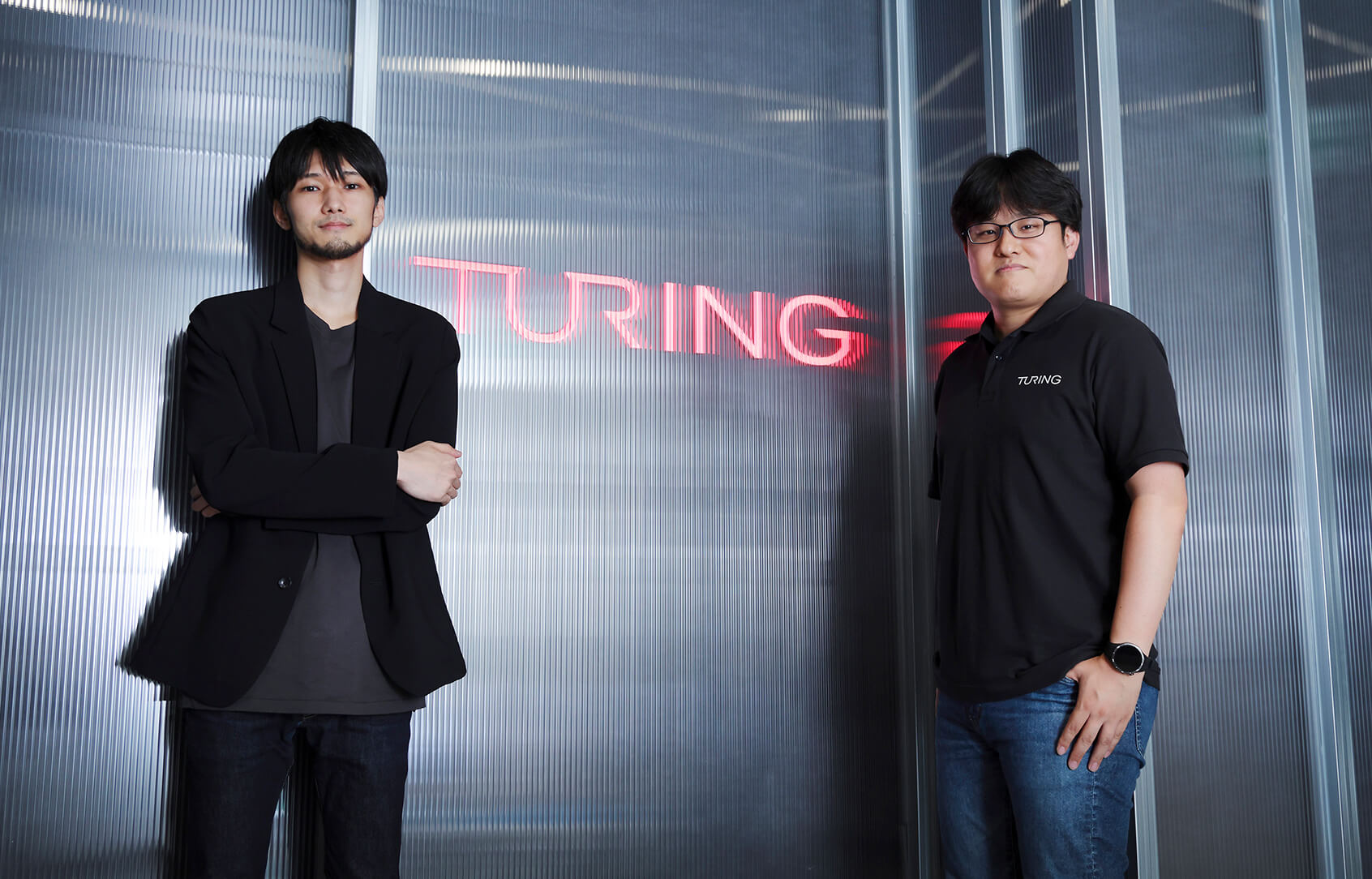
GENIAC brings together selected companies that are taking on the challenge of advancing domestically developed generative AI. What kind of individuals are the key drivers behind these efforts? In this article, we spoke with Kohei Watanabe and Shingo Yokoi of Turing Inc., a startup aiming to achieve fully autonomous driving.
Under GENIAC, the company is being supported in developing a foundation model with embodied intelligence that forms the core of its autonomous driving technology, leveraging generative AI to improve its performance. Publicly declaring “We Overtake Tesla,” the company is driven by a bold vision—but what motivates the key figures behind it?
Profiles
Kohei Watanabe
Born in 1990 in Yamagata Prefecture. Senior Infrastructure Engineer (in charge of computational infrastructure) in the Development Division at Turing Inc. After studying semiconductors at a technical college, he joined a major telecommunications company. He worked on the development and implementation of cloud services in a newly established cloud service division, then transferred to service planning, where he was responsible for planning large-scale GPU cluster services. He later moved to a global storage company, where he gained expertise in storage technologies, before joining Turing Inc.
Shingo Yokoi
Born in 1988 in Hyogo Prefecture. Senior Researcher (in charge of foundation model development) in the Development Division at Turing Inc. After joining as a new graduate, he worked as a system engineer, engaging in system development using Java and C#, as well as data analysis in a pharmaceutical company. In his previous role, he conducted research and development in image-based deep learning technologies and participated in a national project on pathological image diagnosis. He also took part in Kaggle machine learning competitions to further develop his skills and achieved the title of Competitions Grandmaster. He is currently promoting the application of the vision-language model (VLM) “Heron,” which integrates visual and language understanding, to autonomous driving at Turing Inc.
Moving from Tohoku to Tokyo: Discovering Turing’s Vision Through Challenges
──AI “foundation models” and the “computational infrastructure (supercomputers)” that support their development are inseparable—two sides of the same coin. To begin, could you tell us what sparked your interest in this field, Mr. Watanabe, as an engineer specializing in computational infrastructure?
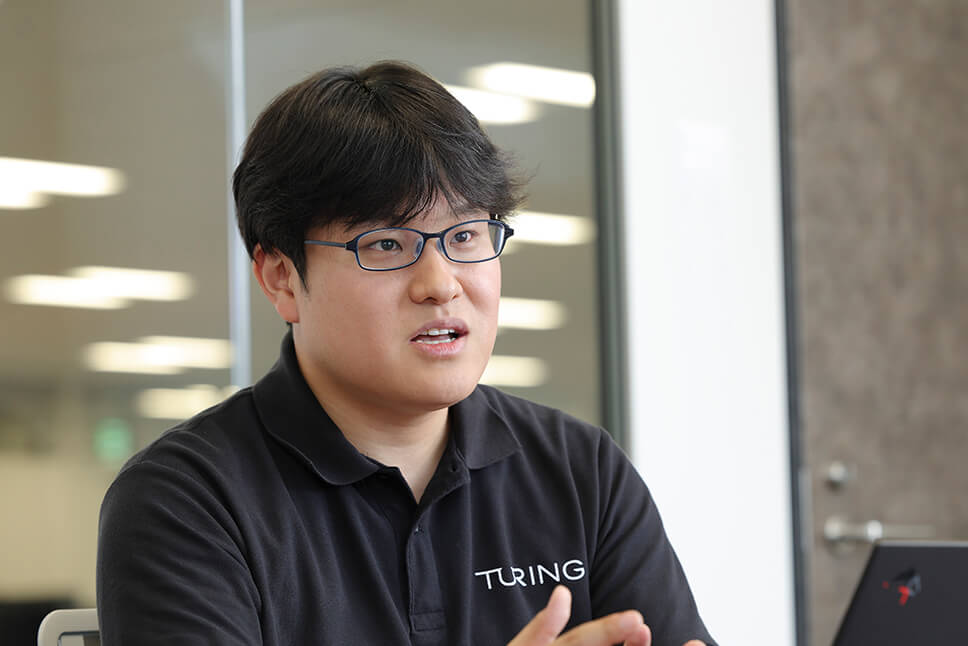
Watanabe: I am originally from Yamagata Prefecture and had never left the Tohoku region until I graduated from a technical college. Even back then, I always had a strong desire to explore the wider world. I studied electronics in school, and after graduating, I joined a major telecommunications company, where I worked on the development and planning of cloud services. Through that experience, I encountered the field of computational infrastructure and became fascinated by its depth.
A major turning point for me was a project to build a large-scale cluster equipped with a vast number of GPUs. I was struck by how different the approach was compared to conventional IT systems. I served as the project manager for its construction and optimization, and through that experience, I became deeply engaged in the field of computational infrastructure.
──How did you first encounter AI, and what led you to join Turing?
Watanabe: After working for over ten years at a major telecommunications company, I moved to a global storage company. It was during that time that ChatGPT emerged, triggering a much larger wave of interest in AI. I had always been very interested in AI-related technologies, but I was truly amazed by the speed of its evolution.
At the same time, having graduated from a technical college, I had always felt that it might take longer to build my career within a large corporation. When I began to feel that “without taking on challenges, there is no future,” I was approached by Turing. I was inspired by their vision of achieving fully autonomous driving and their message, “We Overtake Tesla,” which led me to decide to join the company. Turing has a clear goal and is fully committed to pursuing it. I also want to contribute to realizing that vision with strong conviction.
From Astrophysics to AI: Drawn by the Dream of Autonomous Driving and an Ideal Environment
──How did you first encounter generative AI, and what sparked your interest in foundation models, Mr. Yokoi?
Yokoi: During my graduate studies, I specialized in astrophysics. Through my research, I discovered the enjoyment of programming, which led me to pursue a career as a system engineer.
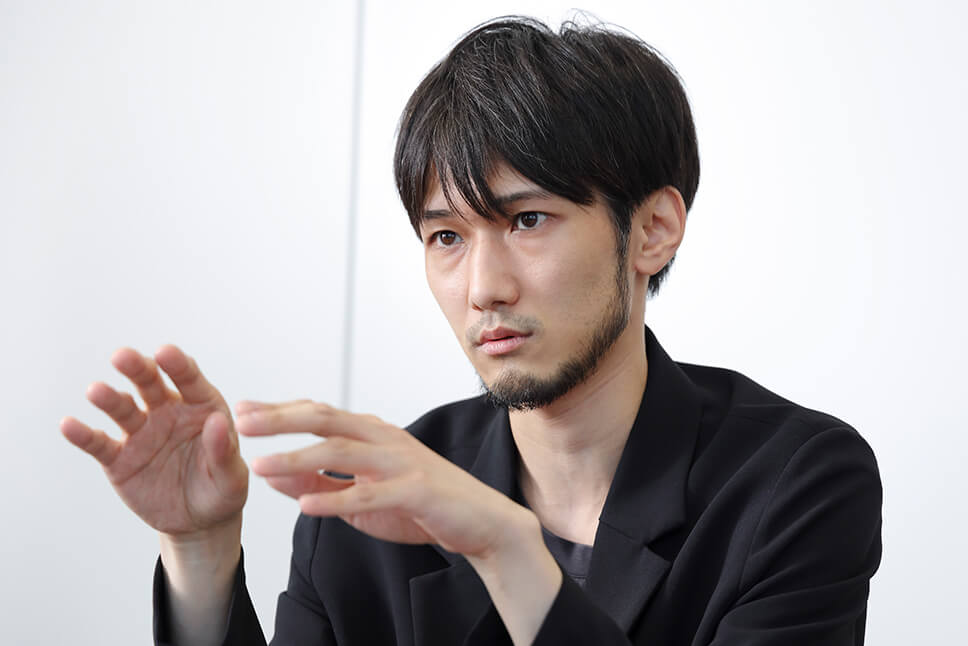
At my first company, I worked on system development and data analysis. After moving to a new company, I became involved in research and development of image-based deep learning technologies. That experience made me realize the potential of AI and sparked my interest in the field.
To further develop my skills, I participated in machine learning competitions on Kaggle, the world’s largest AI competition platform. Fortunately, I was able to achieve the title of “Competitions Grandmaster,” the highest rank. Only around 369 people worldwide (out of more than 20 million users) hold this title, which led to an opportunity to join Turing.
“Autonomous driving is a dream. However, even if you want to develop it, there are limits without sufficient computational resources. In that sense, Turing does not hesitate to invest in computational resources, and that was a major factor in my decision to change jobs.”
Aiming to Develop an Embodied Foundation Model for Autonomous Driving
──Mr. Watanabe and Mr. Yokoi, what kind of development work are you currently involved in within Turing’s “fully autonomous driving” project?
Watanabe: What we are aiming to develop is an “embodied foundation model for autonomous driving.” This refers to a model that, in addition to general knowledge about society, possesses capabilities such as understanding traffic rules, spatial awareness, and vehicle control (i.e., embodiment). Just as humans cannot obtain a driver’s license until the age of 18, AI also requires driving knowledge grounded in social “common sense.” To achieve this, we are essentially training a foundation model that can operate in a human-like manner. I am responsible for building and optimizing the computational infrastructure (supercomputing environment) required for this training.
A supercomputer is not simply a collection of connected machines. The computational environment used for model development involves a wide range of configurations and optimizations.
Yokoi: My role is to develop the foundation model itself using the computational infrastructure that Mr. Watanabe has built. When errors occur during execution, we need to determine whether the cause lies in the program or in the underlying infrastructure. We maintain close communication at all times as we proceed with development.
──Do you already have any working implementations?
Watanabe: Mr. Yokoi is also responsible for developing vision-language models (VLMs), and recently released an iOS application for a lightweight VLM called “Heron.” This is an edge AI application that performs image recognition using only the processing capabilities of the iPhone itself, without relying on network connectivity. The ability to accurately recognize objects and language on a familiar device like a smartphone suggests that a future in which compact autonomous driving systems are embedded in vehicles may not be far off.
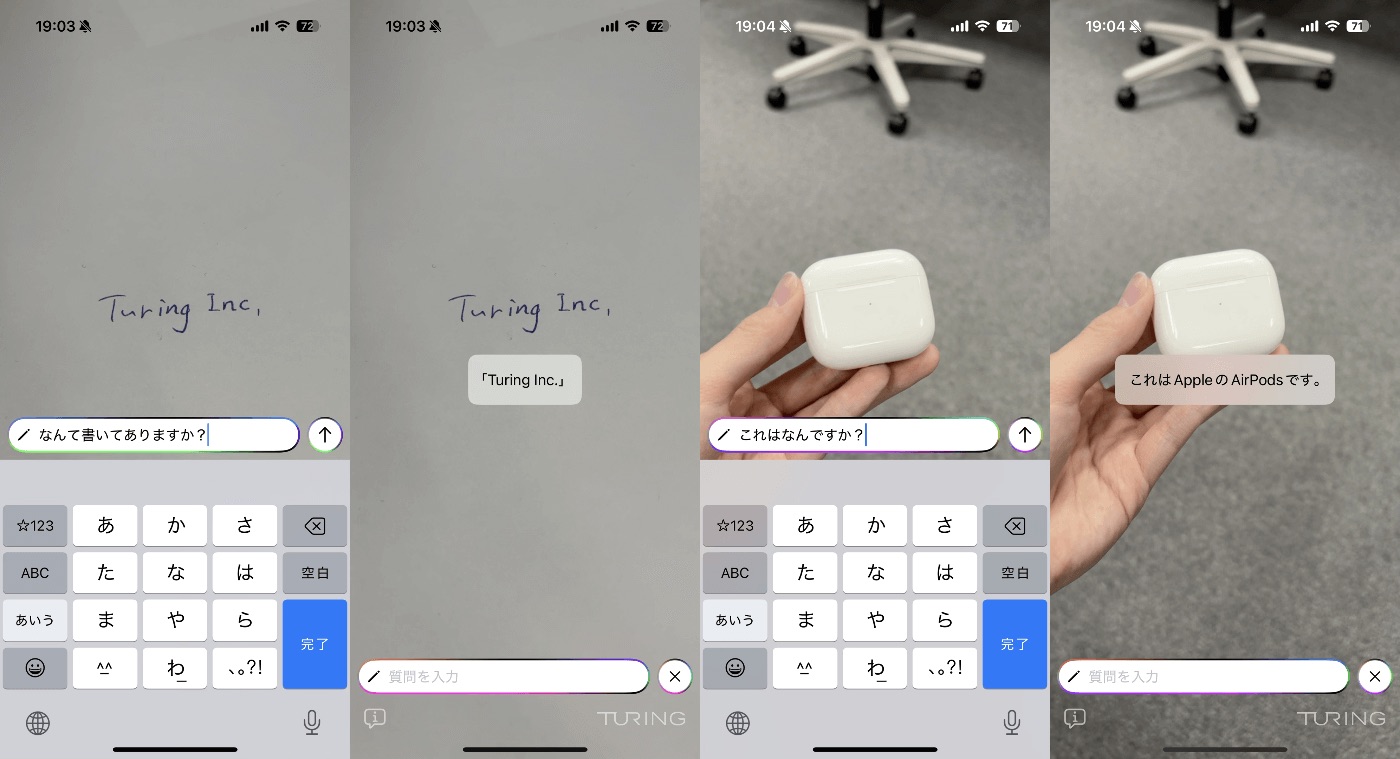
https://apps.apple.com/jp/app/heron/id6745646268
*The app is available for download on iPhone 15 Pro and later models, as well as iPads equipped with the A17 Pro chip or newer.
Yokoi: Heron can interpret and understand information within images with a high level of detail, much like a human. For example, if a road sign appears in an image, the model can take that information into account and answer questions such as the name of a mountain visible in the scene. Its performance is among the best in Japan, and we aim to further improve its accuracy going forward.
Why Top Engineers Are Drawn In: Abundant Computational Resources and a Clear Goal
──Achieving fully autonomous driving is by no means an easy challenge. What aspects of it do you find most rewarding?
Watanabe: When driving in Tokyo, there are many situations—such as traffic congestion—that can be quite stressful. Imagining a future in which fully autonomous driving can help address these situations that humans struggle with, and enrich people’s daily lives, is a major source of motivation for me.
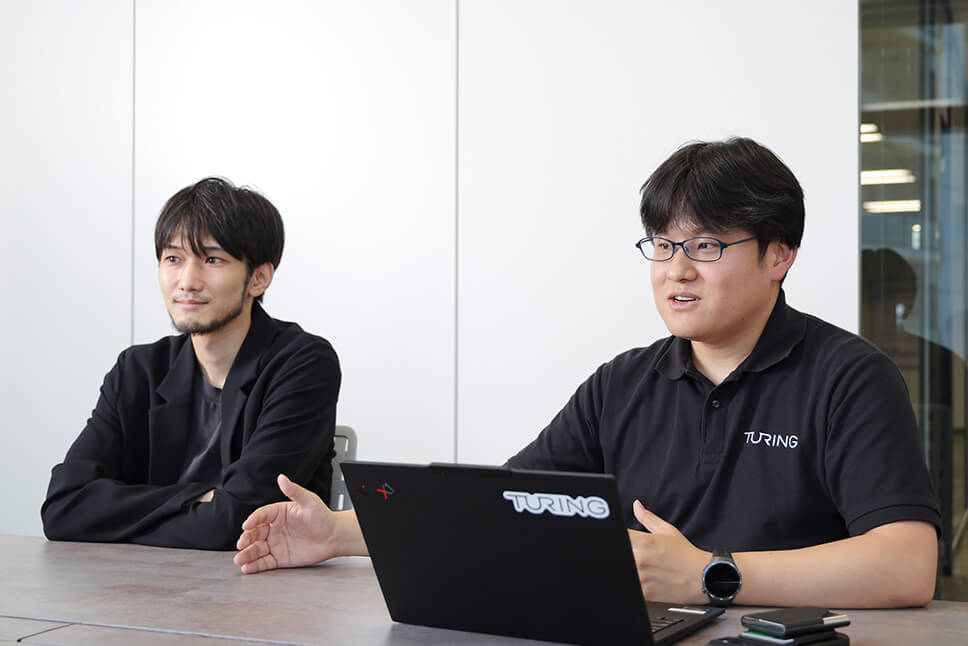
Yokoi: As an engineer, I find it extremely rewarding to be able to make full use of large-scale computational resources in pursuit of the ambitious goal of achieving autonomous driving.
While the current AI industry is seeing intense competition in the performance of large language models (LLMs), there is also a sense that the ultimate goal beyond that is not always clearly defined. In contrast, Turing has a clear and unwavering objective: achieving fully autonomous driving. I believe this itself represents a unique position within the AI industry and is a major attraction of the company.
──What do you see as Turing’s key strengths?
Yokoi: One of Turing’s strengths is its abundant computational resources, including its in-house GPU cluster known as the “Gaggle Cluster.” In addition, the team—including Mr. Watanabe, who manages this infrastructure—provides very attentive support, allowing us to focus on development with confidence. This environment itself is a major strength.
Watanabe: Without an environment where engineers can work with confidence, top talent will not come together. Working alongside highly skilled engineers within the company is also very stimulating for me. New achievements emerge almost every day, and each one brings a sense of surprise and excitement.
Gratitude for the Connections Fostered by GENIAC and the Support Accelerating Development
──In the second phase of GENIAC, you are working on building advanced VLMs and collecting and organizing large-scale 3D data, correct?
Watanabe: Yes. For the autonomous driving foundation model we aim to develop, advanced yet lightweight vision-language models (VLMs) are essential. To that end, we are first training the model on a dataset of 250 million Japanese-focused image-text pairs. In addition, by incorporating traffic environment data created from 3,500 hours of driving data collected in Tokyo, we aim to realize a “foundation model capable of driving.” In the second phase, we are conducting repeated validation experiments in simulation environments, with the next step being real-world testing and implementation.
We are very grateful for the development support provided by GENIAC, and we also appreciate the opportunity to interact with a wide range of companies working in generative AI, which is highly stimulating. For example, we were impressed by the high level of simultaneous interpretation services offered by Kotoba Technologies, which specialize in speech generative AI. We are sincerely grateful for being selected, including the new connections we have made through this program.
Delivering Results with Determination to Justify Investment in the Future
──Finally, could you share your goals going forward?
Yokoi: I joined Turing because I wanted to make a significant impact on society. To achieve that, I aim to continue creating new value from a broad perspective in the years ahead.
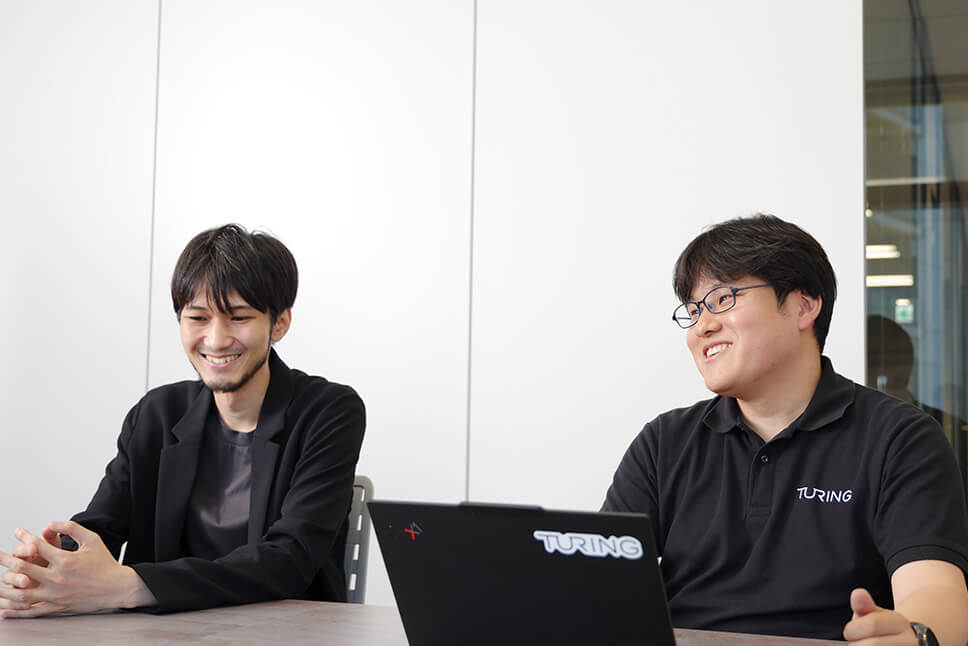
Watanabe: Computational infrastructure (supercomputers) is a cost center in AI development—it requires enormous investment. However, if fully autonomous driving becomes a reality, there will come a day when we can say, “All of our past investments were for this.” On the other hand, if we fail to achieve it, both time and resources will be wasted. To prevent that, we must deliver results every day with absolute determination. That is the mindset I bring to my work.
GENIAC Top Page
