
2025/12/25
GENIAC brings together selected companies and organizations that are taking on the challenge of advancing domestically developed generative AI. What do the key figures behind these efforts envision, and where do they see opportunities for progress?
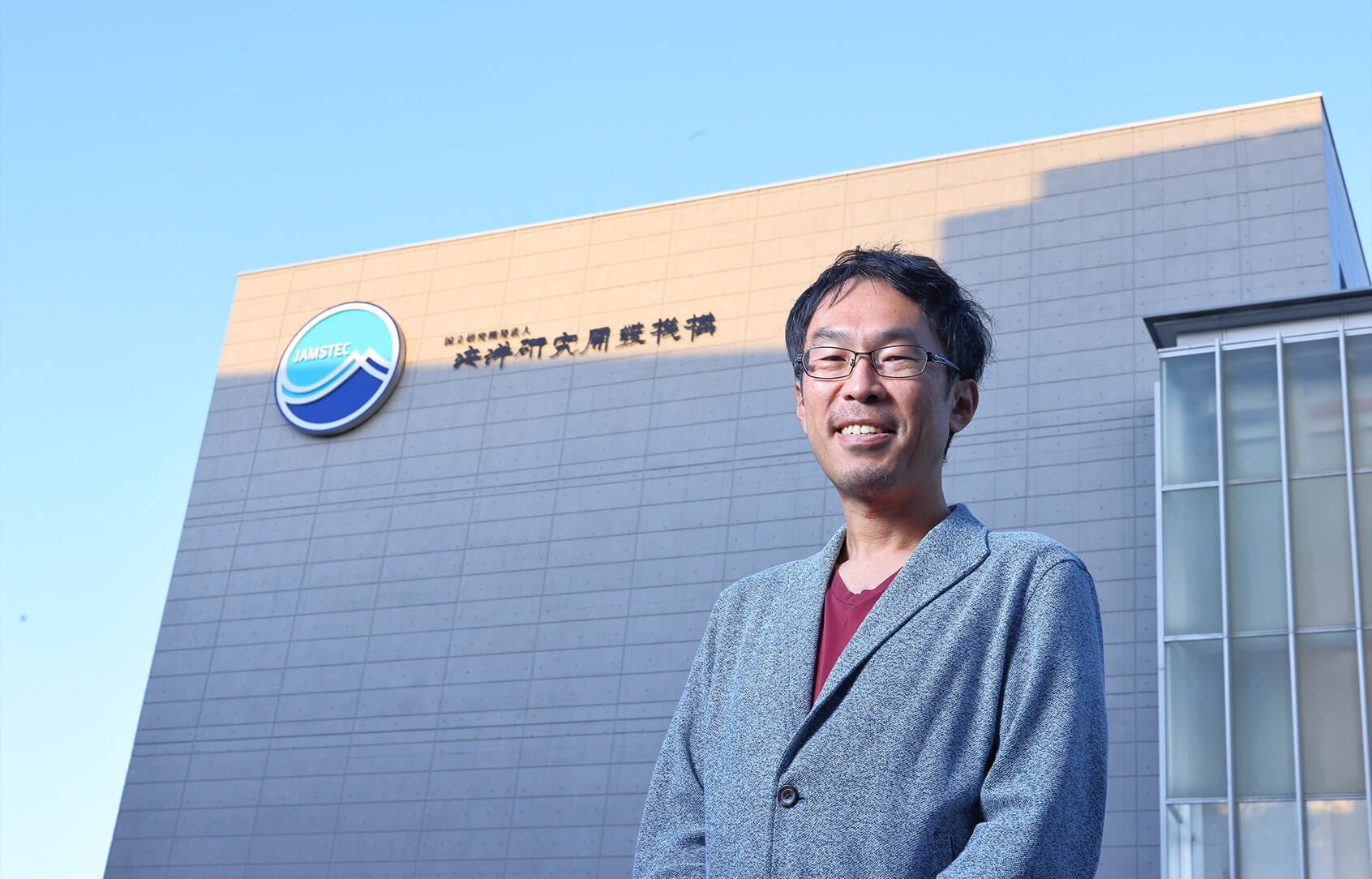
In this article, we spoke with Daisuke Matsuoka of JAMSTEC, who has been working on the development of specialized generative AI in the ocean and earth sciences domain during the second cycle of GENIAC. We discuss the origins of his research, challenges related to computational resources, insights gained through GENIAC, and the outlook for real-world implementation.
Profile
Daisuke Matsuoka
Born in 1979 in Yamaguchi Prefecture. Principal Researcher, Data Science Research Group, Japan Agency for Marine-Earth Science and Technology (JAMSTEC). After studying information engineering at a technical college, he earned a Ph.D. in Engineering from the Graduate School of Science and Engineering, Ehime University. During his studies, he worked on space plasma simulations and data visualization using the “Earth Simulator.” He joined JAMSTEC in 2009, later expanding his research into image recognition and data analysis in the ocean and earth sciences domain. In 2022, with the establishment of the Data Science Research Group, he was appointed as its group leader. He is currently focused on the research, development, and real-world implementation of specialized generative AI.
An Interest in Information Science Sparked on a Seto Inland Sea Island
──What led you to pursue information science within engineering, Mr. Matsuoka?
Matsuoka: I am originally from Yamaguchi Prefecture and grew up on an island in the Seto Inland Sea. When I was young, my father bought me an MS-DOS computer, and I remember copying BASIC code line by line. Of course, even a single mistake would result in an error, and at first I disliked programming because of that.
Although I initially felt uneasy about programming and computers, I chose to enroll in the Department of Information Engineering at Oshima National College of Maritime Technology without thinking too deeply about it. This type of maritime technical college is quite rare—there are only five in Japan—and they are primarily aimed at training professionals for the shipping industry. However, much of our coursework, such as weekly programming exercises, was not directly related to maritime studies.
At the same time, living in a dormitory, I happened to come across scientific magazines such as Newton, which sparked a strong interest in space and the Earth, and led me to learn about the work of researchers. I had already decided to transfer from the technical college to the Faculty of Engineering at Ehime University, and I chose a laboratory focused on space-related research within the information engineering field. I then continued studying space from an information science perspective through my doctoral program.
──What led you to join JAMSTEC, where research focuses on the Earth’s environment and oceans, given your initial interest in space?
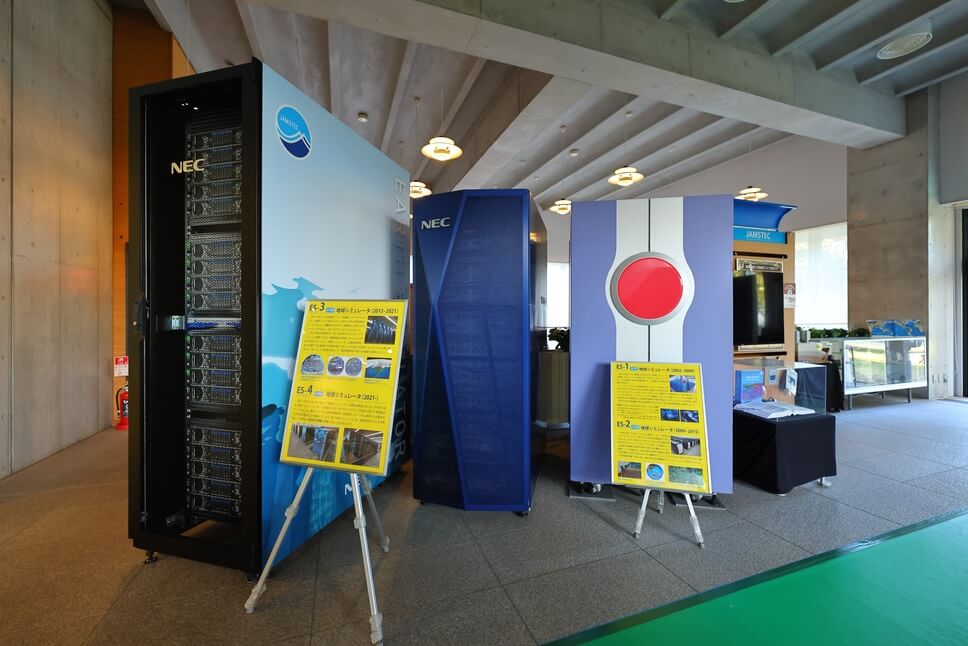
Matsuoka: During my time at university, I conducted research using large-scale numerical simulations of space plasma phenomena, such as solar flares and auroral substorms in the Earth’s magnetosphere. At that time, I was already using the first-generation “Earth Simulator” supercomputer located here at the Yokohama Institute.
In this type of research, not only the simulations themselves but also surrounding technologies—such as parallel computing, large-scale data transfer, and visualization—are extremely important. I believed that the knowledge and skills I gained could be applied not only to space but also to the Earth and oceans, which led me to apply to JAMSTEC. The fact that the ocean had always been a familiar presence in my life may also have influenced my decision.
──Could you briefly explain the role of JAMSTEC as a national research institute, and your current research?
Matsuoka: JAMSTEC, established in 1971, is a national research and development agency under the Ministry of Education, Culture, Sports, Science and Technology (MEXT). It aims to advance an integrated understanding of the oceans, the Earth, and life, and to apply the outcomes of its research and development to global peace and the resolution of societal challenges.
Most researchers specialize in earth sciences such as oceanography and meteorology. As one of the few specialists in information science, I have worked in the Earth Simulator Center, where I focused on visualizing and converting raw data obtained from simulations and observations into visual formats to support scientific understanding and communication. For example, I have worked on classifying ocean eddies and cloud formations based on their characteristics and tracking their movements.
Around 2016, I began to recognize the importance of AI research and started organizing study groups and conducting research informally. In 2022, the Data Science Research Group was officially established, allowing these efforts to take shape within a formal structure. The emphasis on generative AI has grown significantly over the past one to two years. Before that, our work primarily focused on applying machine learning to image recognition tasks using simulation data, satellite observation data, and webcam footage, targeting areas such as marine plastic pollution, seafloor topography, and weather phenomena.
Domain-Specific Models Enable “Single-Researcher Analysis”
──The Earth Simulator operated by JAMSTEC is a powerful computational resource, but were there any constraints when it came to developing generative AI models?
Matsuoka: The Earth Simulator is not a typical supercomputer based on massively parallel CPU architectures. Instead, it adopts a multi-architecture design centered on a specialized architecture known as a “vector processor,” while also incorporating CPUs and GPUs. GPUs suitable for AI development were introduced only in 2021, when the system was upgraded to its fourth generation. At that time, however, there was still limited track record, and the system was equipped with only 64 NVIDIA A100 GPUs.
Because the Earth Simulator is operated under multi-year lease contracts, it is not always possible to adopt the latest GPU architectures. As a result, depending on the purpose, we sometimes procured GPUs independently within our group to conduct AI model research and development. However, scaling up under such conditions was challenging. On-premises systems are strong in terms of stability, while cloud environments offer greater flexibility. Ideally, model development should be carried out using the latest GPUs, with the number of GPUs increased as needed at each phase to allow for more iterations and experimentation.
──How did you come to participate in GENIAC?
Matsuoka: In terms of timing, we saw the potential for this initiative to become a key pillar of JAMSTEC’s fifth mid- to long-term plan starting in FY2026. At the same time, we wanted to begin research and development that could not be achieved using on-premises supercomputers alone by leveraging the latest cloud-based GPUs. Although the preparation period was short, we submitted a proposal for the second cycle under the theme “Development of a Generative AI Foundation Model for Regional Climate Services,” and were selected.
──What kind of model did you develop?
Matsuoka: We developed a large language model (LLM) specialized in climate change risk assessment and policy planning, with the aim of supporting more efficient preparation of TCFD (Task Force on Climate-related Financial Disclosures) reports for companies, as well as helping local governments formulate climate change adaptation strategies.
One of the underlying challenges is that conventional climate policy planning requires not only expertise in global warming and regional economies, but also a wide range of knowledge spanning industries, culture, and more, along with significant human effort. In contrast, our domain-specific model enables even a small number of personnel without extensive expertise to carry out these tasks more efficiently. For example, we aim to enable an end-to-end workflow—from utilizing future climate projection data to risk estimation, policy planning, evaluation, and validation.
──Could you tell us about the model’s scale and your approach to its release?
Matsuoka: Based on “Swallow,” a 70B-parameter model developed by the Institute of Science Tokyo that enhances Japanese-language capabilities on top of Llama 3.3, we conducted instruction tuning specialized for acquiring climate-related knowledge, handling tabular data, and performing scientific computations. Using our own benchmark tailored to climate change tasks, we achieved a 20% performance improvement compared to the base model.
The target accuracy and model scale were set at realistic levels, taking into account the balance between GENIAC funding and our own financial contribution. We have now submitted our research results as an academic paper, and plan to release the model and dataset after acceptance.
──What was the biggest challenge in building the model?
Matsuoka: As expected, the biggest challenge was the quality of the training data. A development period of six months was not necessarily sufficient for fully refining the dataset, and ideally, we would have liked to involve a broader range of domestic experts to improve data quality. During the development period, we primarily relied on automated data generation, with expert review incorporated only in limited areas. This is a key area we intend to strengthen going forward.
──What outcomes or new challenges did you encounter through participating in GENIAC?
Matsuoka: The greatest takeaway was being able to closely observe the organizational structures and speed of private-sector players, particularly startups. On the other hand, as a public research institution, we face constraints in terms of personnel, budget, and decision-making processes, which meant we were not able to run validation cycles as extensively as we would have liked.
Through the business matching events, we were given opportunities to meet many private companies, and there was genuine interest in our work. However, we were not able to translate that into commercialization within the project period. While it may sound like an excuse to say that, as an organization primarily focused on academic research, we are not inherently strong in commercialization or real-world implementation, ensuring that our work leads to practical applications is our most important goal going forward.
──Will you continue your research and development of domain-specific models in the future?
Matsuoka: In fact, the planning of climate change countermeasures is more centrally aligned with the National Institute for Environmental Studies (NIES), another national research and development agency. Starting this September, I will also be working as a visiting researcher there to jointly advance research and development. Structurally, we expect to further develop and strengthen the GENIAC project through collaboration with local governments as well.
A Turning Point in Japan’s Research Presence and AI Architecture
──What would you like to say to those aspiring to work in the AI field?
Matsuoka: Compared to the private sector, academia faces challenges in terms of staffing and compensation, and recruitment is not always easy. However, it provides an environment where one can tackle societal issues head-on from a mid- to long-term perspective.
At JAMSTEC, we also have cross-appointment programs that allow external researchers and engineers to engage in scientific research and the resolution of societal challenges. We welcome those who are interested in contributing to research and development, even on a part-time basis.
──Is Japan advanced in climate change research compared to Western countries?
Matsuoka: Many countries have research institutions dedicated to climate change and environmental issues, but internationally, these efforts are coordinated under the framework of the Intergovernmental Panel on Climate Change (IPCC).
Within this context, Japan has played a leading role in climate simulation research, supported in part by the Earth Simulator. Even today, as a maritime nation, Japan maintains a certain level of international presence through its unique strengths.
──Will AI play a larger role in the next generation of the Earth Simulator?
Matsuoka: GPUs have only recently been introduced into the Earth Simulator, and we are still in the first generation of such integration. Looking ahead, there is a possibility that the focus will shift from CPUs and vector processors toward the use of highly efficient GPUs. In response, we may need to significantly redesign existing simulation programs to adapt to these changes.
──How do you view the significance of JAMSTEC’s unique observational data?
Matsuoka: Current AI training often relies on existing or synthetic data, but there are types of data that can only be obtained through on-site exploration, such as deep-sea research. For example, discovering new species through robotic exploration of undersea caves is something that cannot be found on the internet and is extremely valuable for AI development. To enable this, strengthening our field capabilities—such as updating aging large-scale deep-sea research vehicles like Shinkai 6500—is essential.
──What are your plans for public outreach and education going forward?
Matsuoka: As part of the marine STEAM education library we have already launched, we are considering developing tools such as chatbot-style systems that allow users to learn about past, present, and future Earth environments.
In research, we aim to go beyond weather and climate by developing domain-specific generative AI agents for fields such as oceans, biology, the environment, and earthquakes, and enabling them to collaborate in an interdisciplinary manner. Building on this, we are also exploring ways to provide personalized environmental services that anyone can access.
──Finally, could you share the significance of public institutions taking on development challenges within GENIAC?
Matsuoka: It was highly meaningful to receive strong support for the challenge of linking academic research outcomes to real-world problem solving. Beyond the originally intended applications, there is potential for the impact to expand in unexpected directions. For future participants, it is important to remain flexible in adjusting focus and to keep collaboration opportunities open. As this is a project led by the Ministry of Economy, Trade and Industry and NEDO, it brings together leading organizations across sectors—from startups to large corporations—allowing participants to learn from each other’s experiences up close and move forward together. That is what I see as the true value of GENIAC.
GENIAC Top Page
