

2026/03/12
Companies selected for GENIAC are taking on the challenge of advancing Japan-developed generative AI. What are these key players aiming for, and where do they see the breakthrough opportunities? ABEJA Inc., which has been continuously involved since the first phase of GENIAC’s “Development Project for Competitive Generative AI Foundation Models,” has set out in its third phase to implement autonomous AI agents capable of handling mission-critical operations for enterprises. We spoke with Kyo Hattori, who leads the development, about his experience building a mahjong AI that first drew him into machine learning, the realities of developing large language models (LLMs), the insights gained from competing on Kaggle, and the perspectives essential to strengthening Japan’s overall development capabilities.
Profile
Kyo Hattori
Born in 1988 in Aichi Prefecture. Principal Data Scientist at ABEJA Inc. After completing his graduate studies at the Graduate School of Information Science and Technology, Osaka University, he was involved in the planning and development of web applications at a major telecommunications company. His experience developing a mahjong AI—initially as both a hobby and a learning endeavor—led him to engage in machine learning research and application development. He joined ABEJA in May 2020. After gaining experience as a data scientist across a wide range of projects and serving as a manager within the data science organization, he returned to a specialist role. In the GENIAC project, he leads the development of large language models (LLMs) as a project leader. Alongside his professional work, he actively participates in data science competitions such as Kaggle and atmaCup, earning the title of Kaggle Grandmaster and winning atmaCup three times (as of July 2021). He also serves as a board member of the Japan Committee for the International Olympiad in Artificial Intelligence.
A Turning Point Into Machine Learning: Mahjong AI
──What first sparked your interest in computers and programming?
Hattori: When I was in elementary school, we didn’t have a video game console at home, but we did have a personal computer, so I naturally started using it. At the time, I didn’t know anything about programming—I mainly played games, used typing software, and created New Year’s cards or drawings.
Back then, the internet wasn’t as accessible as it is today, and information itself was valuable. I would visit a university lab where my father was affiliated, look things up online, print them out, and bring them home. It’s hard to imagine now, but that was the reality of the time.

──What kind of research did you pursue at university and graduate school?
Hattori: I studied information science at Osaka University and conducted research related to virtual reality (VR) in a human information engineering lab. My focus was on how humans interactively perceive information from the external world—for example, examining how spatial recognition changes when the field of view expands while wearing VR goggles.
──After joining a major telecommunications company, what led you to move into machine learning?
Hattori: When I first joined as a new graduate, I wasn’t working as a programmer. Instead, I took on a role closer to a systems integrator, handling requirements definition, vendor management, and other project management tasks. My interest in machine learning was sparked by a mahjong AI I developed as a hobby. During my student years, I played online mahjong extensively, but after starting work, I had less time. Around then, I learned that some people were building mahjong AI using deep learning, and I thought, “I want to build one myself and have it play.” I began studying on my own, and after about three years, I requested a transfer and moved to a research and development department focused on machine learning.
──What did you learn from developing the mahjong AI?
Hattori: I found the process itself—training the AI and watching it gradually improve—fascinating. At the same time, I realized that the strength of a model ultimately depends on how you collect data, design evaluation methods, and iterate through hypothesis testing. That experience made me want to deepen my expertise, and I began to engage more seriously with machine learning in my professional work as well.
Value Comes from Taking It All the Way from Problem Definition to Deployment
──Why did you decide to move to ABEJA in 2020?
Hattori: The primary reason was my desire to further develop my expertise as a machine learning and data science specialist. While I was able to engage in such work at my previous company, working with data from a single organization inevitably limits your scope. I believed that exposure to data from a wider range of industries would broaden my capabilities.
──What does your current work involve?
Hattori: At ABEJA, data scientists take a comprehensive, end-to-end approach—from problem definition to model development and deployment. We engage directly with clients to understand their challenges, receive and analyze data, and determine what kind of models will be effective, what outputs are appropriate, and how evaluation should be designed. We then build and implement these solutions ourselves.
Of course, this is not done individually. We collaborate with customer success teams and system engineers, dividing roles to ensure the solution is brought to a stage where it can be effectively used in operations.
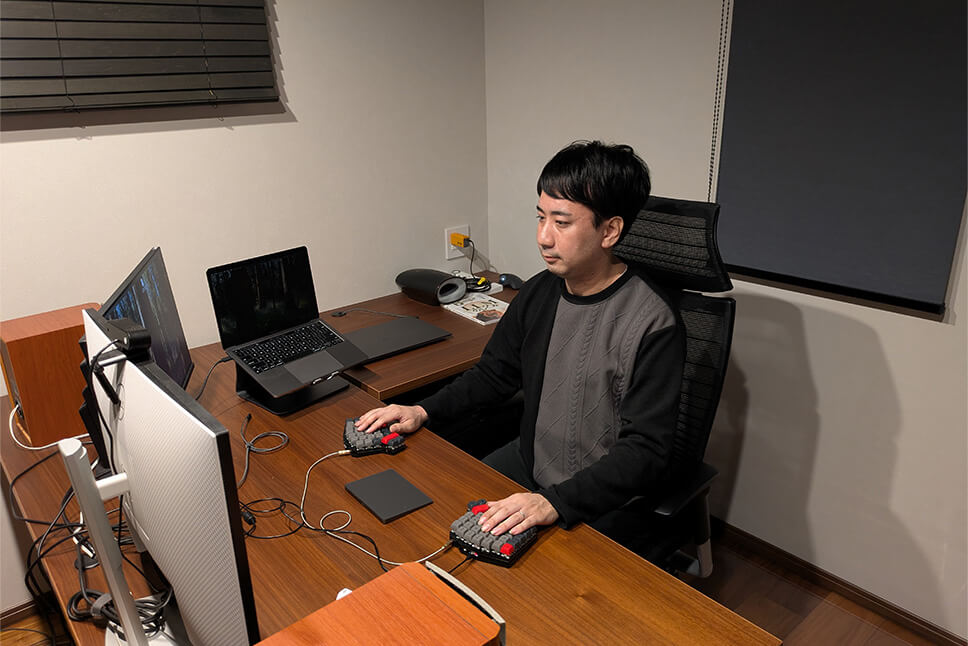
──What makes it challenging to introduce AI into mission-critical operations within enterprises?
Hattori: At ABEJA, we go beyond automating peripheral tasks and focus on how to integrate AI into core operations—mission-critical processes. In these areas, errors are not tolerated, and in many cases, highly refined designs and business processes are already in place. That makes the challenge particularly complex. It’s not something that can be addressed through technology alone. We need to understand the underlying business assumptions and design not only the implementation but also post-deployment operations and the delineation of responsibilities.
Generative AI Development Is Not a One-Shot Effort but a Process of Accumulating Know-How
──ABEJA has been working on large language model development from an early stage, correct?
Hattori: At ABEJA, we conduct research and development with a clear focus on what needs to be accumulated to create value. The same applies to large language model (LLM). Anticipating growing demand in this area, we began R&D in 2018 and had already developed models at a scale comparable to GPT-3 even before ChatGPT emerged. Later, as massive investments accelerated development overseas and the pace of adoption increased, we built one of the first commercial services in Japan and began offering LLMs.
──What are the realities and the appeal of LLM development?
Hattori: It’s not a matter of building a good model and expecting it to solve everything. The core lies in how you connect LLMs to the actual operations and challenges faced by companies. In addition, as you pursue higher accuracy and scale up models, the costs of training and evaluation increase significantly. In reality, unless you first establish how to prepare the data, design training processes, and set up evaluation frameworks, simply investing computational resources is unlikely to yield meaningful results.
On the other hand, once you build that foundation and accumulate know-how, you become able to make sound judgments about AI applications. For example, you can determine whether “this is a case where building a model makes sense” or “a different approach would be more appropriate.” That ability itself becomes a valuable asset.
──Why do you participate in Kaggle to improve your development capabilities?
Hattori: First and foremost, I wanted to genuinely improve my technical skills. When I started, I encountered many techniques I didn’t know, which made me realize how much I still had to learn. I continued seriously for about five to six years. Comparing myself with top-ranked participants and identifying the final gaps was often frustrating, but Kaggle is also a bit like an online game through which you can develop your technical skills. That sense of frustration motivates you to improve and keep learning.
Some competitions on Kaggle can be solved within short timeframes, such as a day or a week, and I have won in such settings. Formulating hypotheses, implementing solutions, and validating them through evaluation within limited time—this iterative process directly translates to the pace required in real-world work.
──How does that experience translate into practical work?
Hattori: One key area is evaluation. You learn how to choose appropriate evaluation metrics and understand what happens when those metrics are unstable. You also encounter common pitfalls, such as overfitting, which results in models that cannot be used in practice. Experiencing these challenges in advance through Kaggle helps reduce such risks in real-world projects.
Beyond evaluation, Kaggle also trains you to pursue incremental improvements—such as gaining an additional 0.1% in performance. Through that experience, you develop a sense of whether there is still significant room for improvement within limited time in practical settings, or whether your efforts should be directed elsewhere, beyond just improving accuracy. This ultimately helps in delivering value to clients more efficiently.
Strengthening Japan’s AI Development Capabilities Through GENIAC
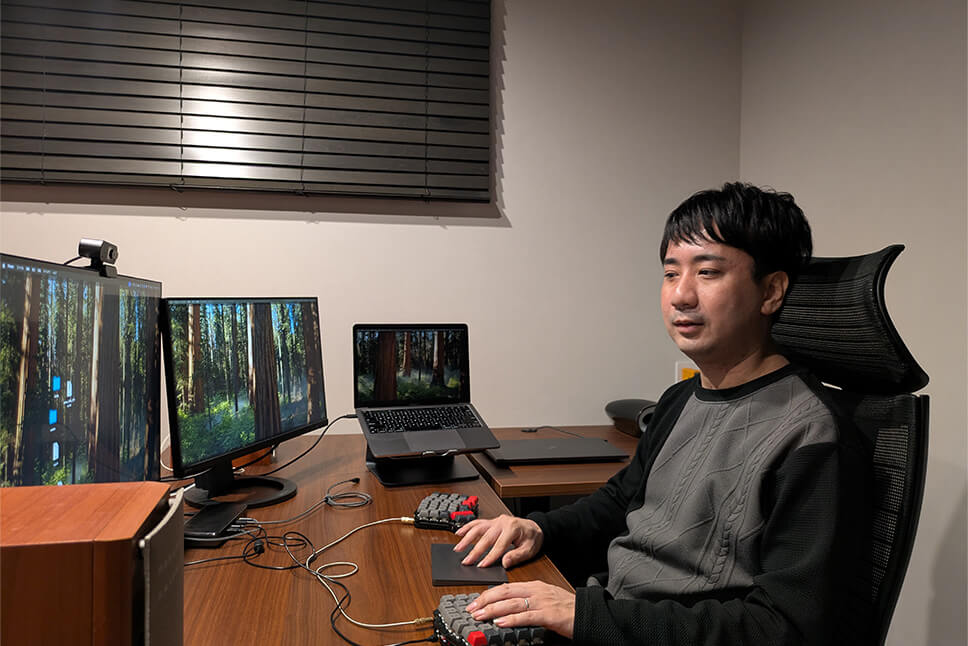
──What motivated you to apply for the first phase of GENIAC’s “Development Project for Competitive Generative AI Foundation Models”?
Hattori: As mentioned earlier, we had already been working on large language model (LLM) development before GENIAC began. However, sustaining such efforts requires significant investment. For companies, especially around the time of going public, it is not easy to independently pursue and scale initiatives that may not directly contribute to short-term revenue. When the GENIAC framework was established, we saw it as a valuable opportunity and decided to participate.
──From a technical perspective, how do you view the significance of continued participation in GENIAC?
Hattori: There are many challenges that only become clear once you actually build these systems. The scope of what needs to be accumulated and experienced is both broad and deep. A single round of participation in GENIAC is not enough to fully grasp it, nor to successfully apply it to other contexts. I see great value in accumulating know-how and experience, including failures, and in gaining hands-on experience across the multiple layers of technology involved. This enables us to take on new challenges.
Moreover, even challenges that were once deemed infeasible can become solvable as models and surrounding technologies evolve. Given the rapid pace of generative AI, something that was out of reach six months or a year ago may now be achievable. In fact, there are cases where what we could not accomplish in the first phase has become feasible in the third phase. The ability to continuously reassess “how far we can go now” without being constrained by past conclusions is a key advantage of sustained engagement.
──What have you gained from participating continuously since the first phase?
Hattori: Through GENIAC, we have been able to continuously pursue research and development in LLMs and related technologies, which has allowed us to build leading-edge know-how in this area. In addition, there is the value of the community. We can see where other companies face bottlenecks and how they overcome them. The presence of deadlines also creates a constructive sense of pressure to deliver results. Since participation requires a certain level of internal commitment, it also demands the determination to see projects through to completion.
As a company that has been involved since the first phase, we also feel a responsibility not to keep our efforts closed but to share them as broadly as possible. If the know-how we have gained helps other companies advance, it will ultimately contribute to strengthening Japan’s overall development capabilities.
──Do you have any message for companies or organizations considering participation in the future?
Hattori: Having a clear sense of purpose is essential. You need to think about what will remain within your organization after the project ends. Without that, you may work hard but end up creating something that is not truly useful. The mindset of internal team members is also critical—whether there are people who are motivated and whether there is a structure that allows them to move forward. When these conditions are in place, GENIAC can lead to meaningful outcomes.
──How do you think generative AI will transform society over the next five to ten years?
Hattori: Rather than the standalone evolution of generative AI, I believe the greater impact will come from its combination with other fields. For example, in areas such as robotics, once these technologies converge, entire industries can begin to move. Changes that are difficult to perceive through incremental performance improvements alone may occur rapidly when multiple domains are connected.
On a personal level, I also feel a strong sense of urgency about improving Japan’s development capabilities. There is still significant room for growth in Japan’s ability to develop models and related technologies. At the very least, we should avoid remaining in a position where we only use APIs. Recently, as my children have grown older, I have had more opportunities to think about what the world will look like in ten years. That has strengthened my sense that we must enhance our development capabilities now.
──What do you think is required of developers in this era of rapid change?
Hattori: The most important thing is to keep learning. Because change is so fast, today’s best practices quickly become outdated, and I believe it is important to embrace and even enjoy that pace of change. Another key is to experiment on a small scale and iterate through validation. In my case, I started with a mahjong AI, and before I knew it, it became my profession. The entry point can be anything, but having a topic you find genuinely interesting helps sustain learning, and that eventually becomes your strength.
It is also essential to create more opportunities for younger generations to test their skills. I am personally involved in organizing the Japan Olympiad in Artificial Intelligence (JOAI), and having a competitive environment where participants can take on challenges accelerates learning. As the next generation grows, the capabilities of the entire industry will improve.
Finally, it is crucial to take responsibility for seeing projects through to deployment—ensuring that what is built is actually used in real-world settings. Only then does it create true value.

