
2026/08/20
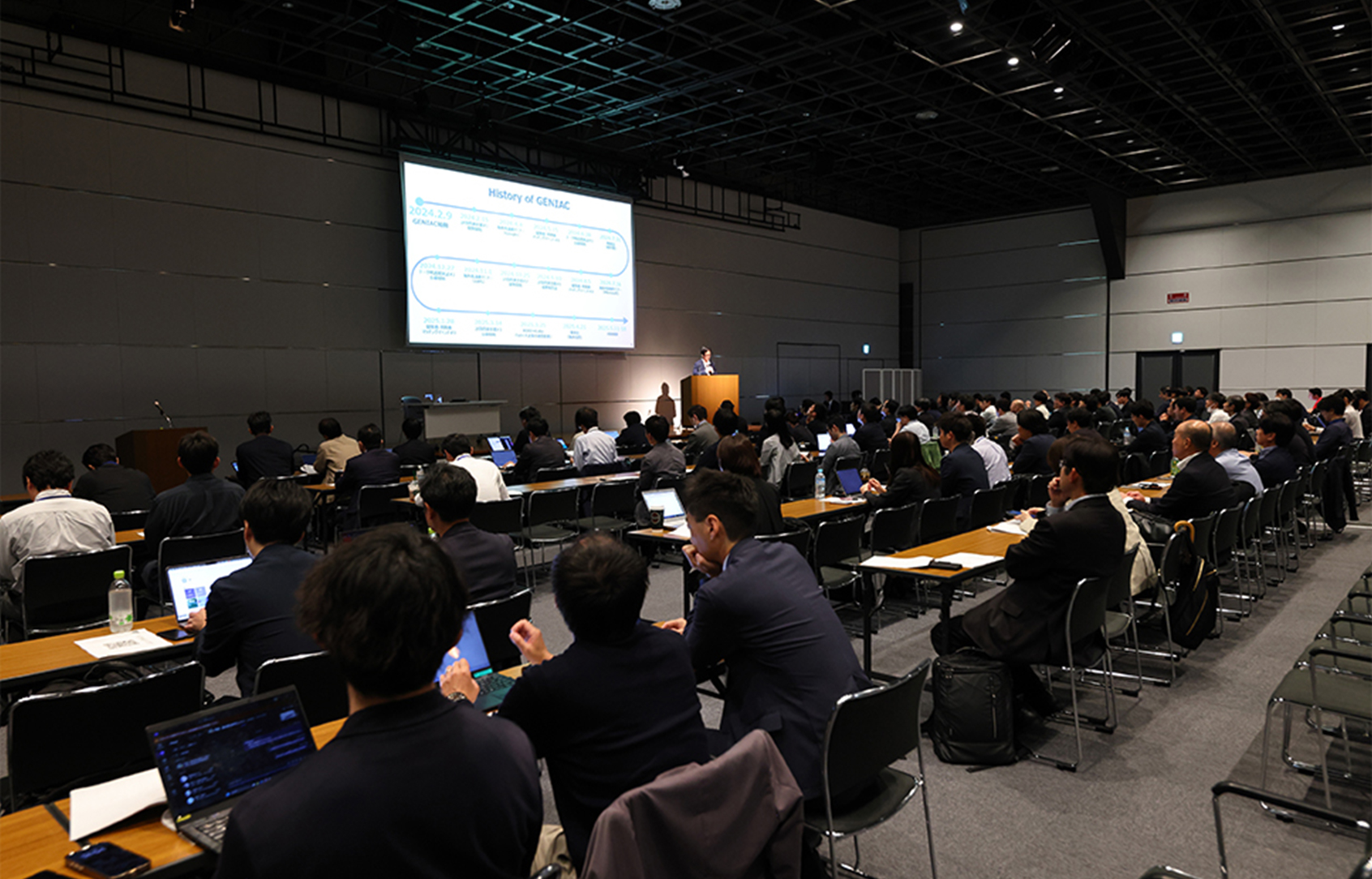
On Tuesday, May 27, 2025, the fourth business matching event was held to promote interaction among GENIAC foundation model developers, user companies, and venture capital firms. The event aimed to provide updates from foundation model developers on their current status and future outlook, promote the practical implementation of these models, and facilitate the exchange of views among stakeholders. A total of 18 companies selected under the GENIAC program and approximately 120 stakeholders participated in the event. The event featured presentations by the selected companies, as well as networking and discussions at company booths throughout the venue. This article provides an overview of the event.
Building a Generative AI Ecosystem through Policy Support
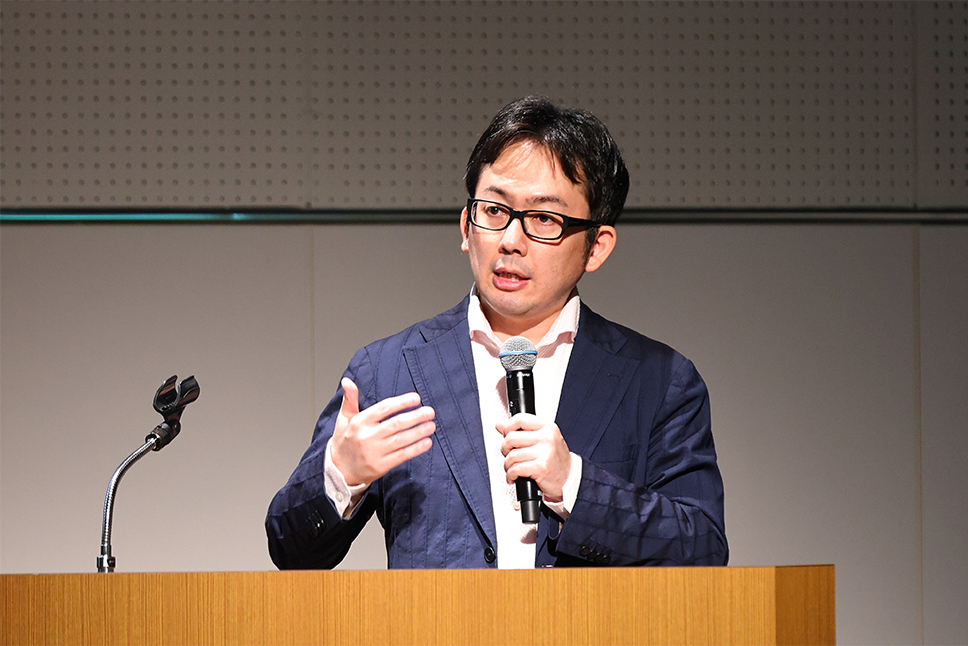
First, Takuya Watanabe, Director of the Information Technology Industry Division, Commerce and Information Policy Bureau at the Ministry of Economy, Trade and Industry (METI), provided an overview of GENIAC’s objectives and progress, as well as the purpose of this event and the future outlook of GENIAC.
Watanabe emphasized that, as the era of generative AI unfolds and the importance of software and data continues to grow, it is essential for Japan not to remain merely a “user” of generative AI, but also to play a role in its development and implementation. To this end, he introduced GENIAC’s support framework, which is built on three pillars: subsidies for computational resources for foundation model development, data utilization, and knowledge sharing.
“GENIAC is currently reviewing applications for its third public call. In addition, to further promote the social implementation of generative AI, we are holding a prize-based development contest called the ‘GENIAC PRIZE,’ which invites proposals for practical AI applications in four fields, including manufacturing, customer support, and administrative screening operations,” said Watanabe.
Watanabe also explained that efforts are being made to build the “data ecosystem” required in the AI era, including exploring mechanisms for trusted data sharing among companies and the appropriate distribution of benefits. Furthermore, he noted that policies are being considered to support expansion into overseas markets, particularly in the ASEAN region, as well as initiatives for foundational research with a view toward artificial general intelligence (AGI).
In closing, Watanabe stated that collaboration between those who “create” and those who “use” AI is key to building an AI ecosystem, and expressed his expectation that this business matching event would promote collaboration between solution providers and users.
List of Developers Presenting at the Business Matching Event
At this event, the following 18 developers delivered presentations. For details of each presentation, please refer to the links below.
- Future Corporation
- DATAGRID Inc.
- NABLAS Inc.
- Ricoh Company, Ltd.
- AI inside Inc.
- Stockmark Inc.
- AIdeaLab Inc.
- OLM Digital, Inc.
- Ubitus K.K. / [Co-proposer] Deepreneur Inc.
- Japan Agency for Marine-Earth Science and Technology (JAMSTEC)
- KK Kotoba Technologies Japan
- Karakuri, Inc.
- ABEJA, Inc.
- Preferred Elements Co., Ltd. / [Co-proposer] Preferred Networks, Inc.
- Algomatic Co., Ltd.
- Humanome Lab., Inc.
- EQUES Inc.
- SyntheticGestalt KK
Lively Discussions Between Developers and User Companies
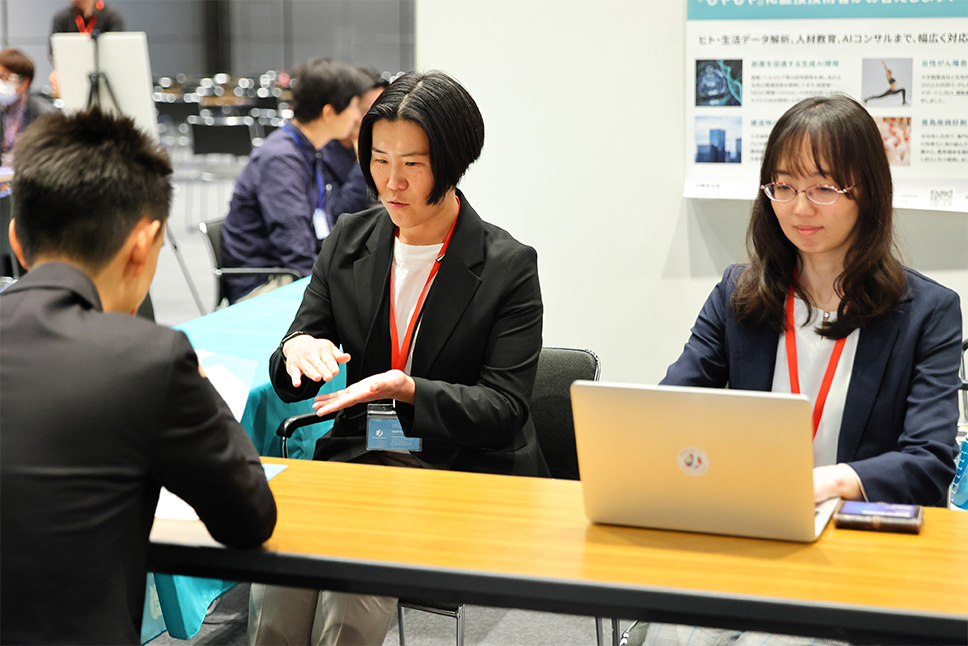
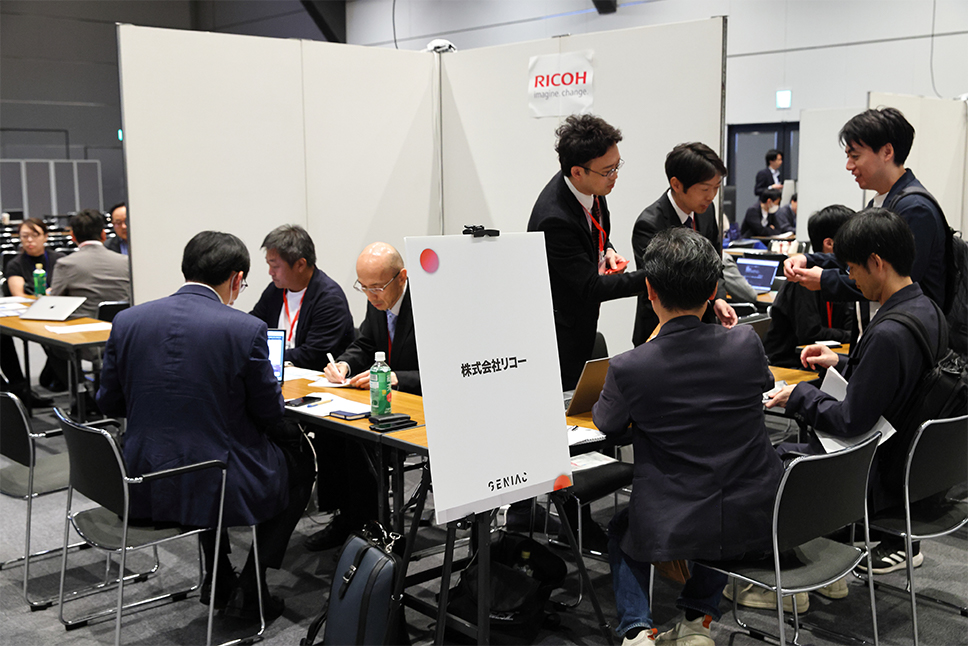
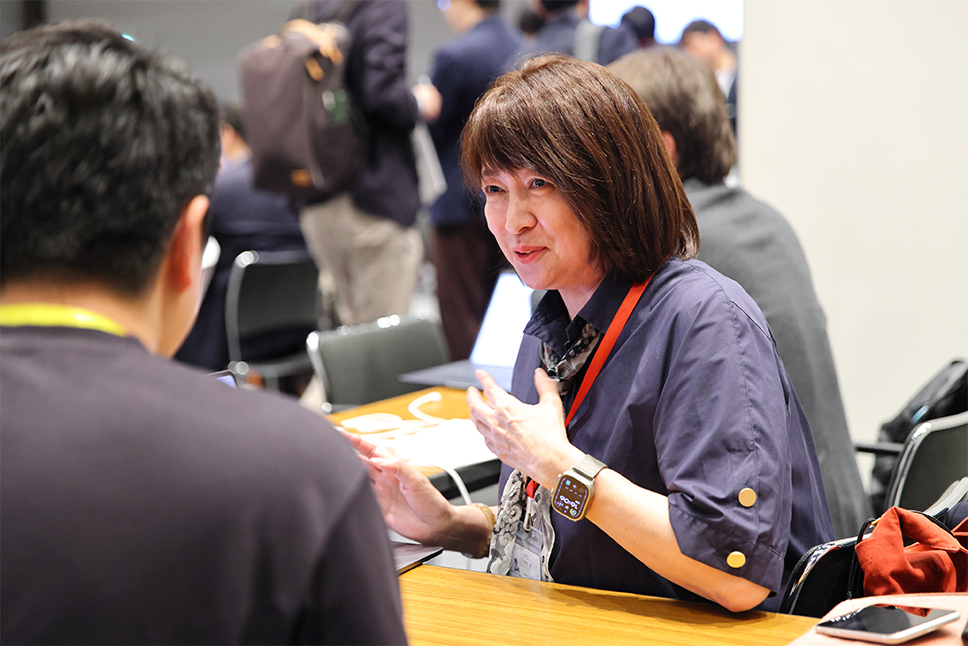
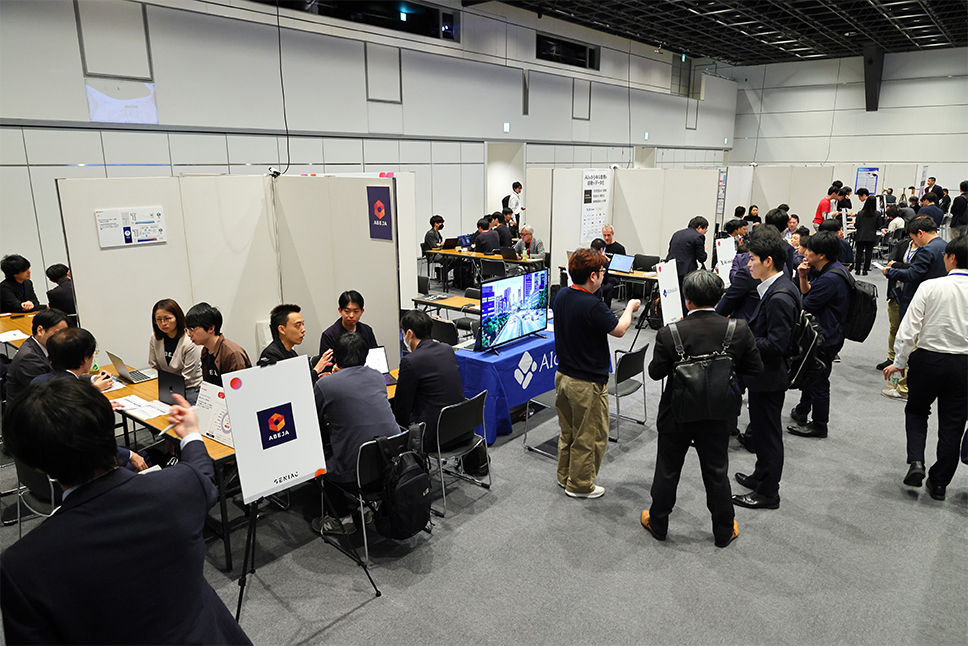
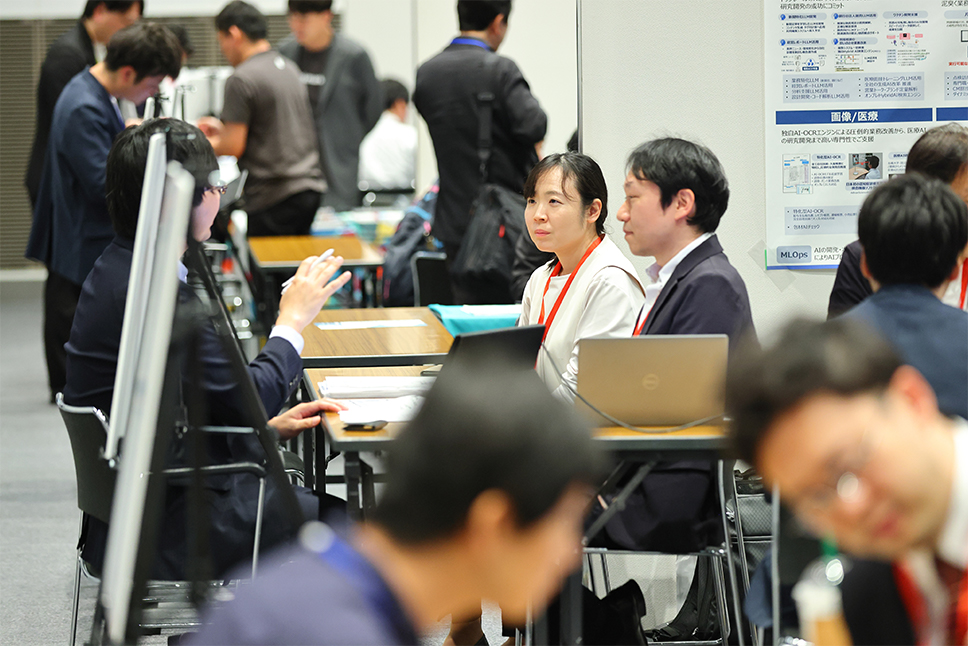
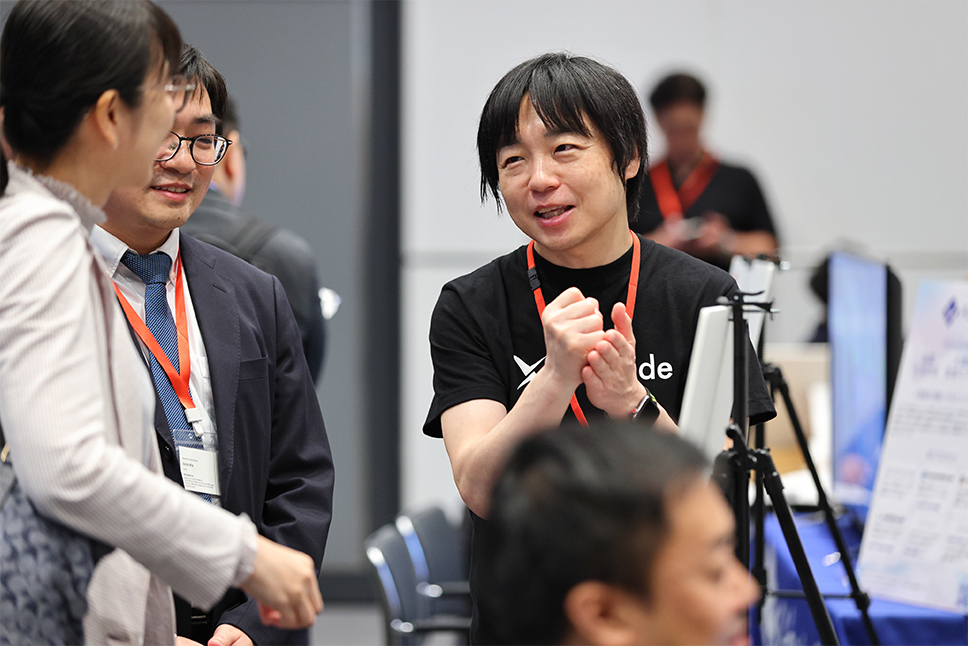
During the business matching session, each participating company demonstrated AI models under development and the services it provides at its booth, drawing a wide range of questions from representatives of user companies. In many cases, these interactions also led to concrete business opportunities and discussions.
Interviews with Developers
Among the developers that participated in the fourth business matching event, comments from ABEJA, Inc. and Algomatic Inc. are presented below.
Promoting AI Adoption Driven by “Business Transformation”: Supporting Corporate DX through a Phased Approach
ABEJA, Inc.
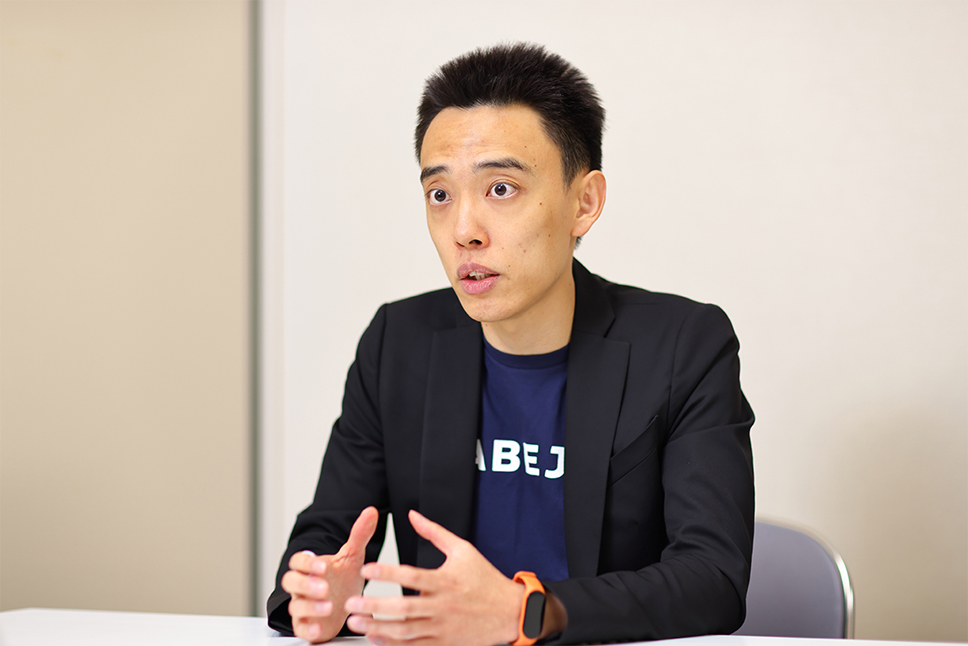
The company is currently focusing on the development of highly accurate large language models (LLMs) and the construction of business improvement solutions leveraging them. Based on open-source models, it customizes solutions to meet the needs of individual companies, with a phased implementation approach that begins with proof-of-concept testing using existing models.
In particular, the company places emphasis on “mission-critical domains,” which refer to core business operations that are central to a company. While introducing AI into areas where failure is not an option requires a careful process, Mr. Kinoshita noted that this is precisely where the key to strengthening the competitiveness of Japanese companies lies. In fact, the company has implemented solutions in the manufacturing sector, such as deploying AI systems in factories to detect pipe deterioration caused by salt damage, reducing operational workload to one-quarter. It is clear that digital transformation (DX) in these core operational areas can lead to broader transformation across entire organizations.
Mr. Kinoshita also noted that many companies have already gone through initial efforts utilizing RAG and are now seeking to move “beyond” that stage.
“Now is precisely the right time to consider developing proprietary LLMs. We feel that we have reached a stage where we can engage in forward-looking discussions with many companies,” he said.
Furthermore, with regard to Japan’s generative AI industry as a whole, Mr. Kinoshita emphasized the importance of cultivating talent and industrial foundations domestically. Through participation in GENIAC, he expressed a strong sense that the base of talent engaged in LLM development and application is expanding.
If this field does not gain momentum, domestic companies will fall behind in the fundamental wave of DX,” he stated, adding that the company aims to support businesses in pursuing more proactive DX initiatives through collaboration with partners committed to the social implementation of generative AI.
Regarding relationships with overseas vendors, he described them as “complementary rather than competitive,” and expressed the intention to work with motivated domestic companies to drive transformation as a key player in promoting DX and AI originating from Japan.
Reconfirming the Need for Domestic AI: A Strong Sense of Momentum
Algomatic Inc.
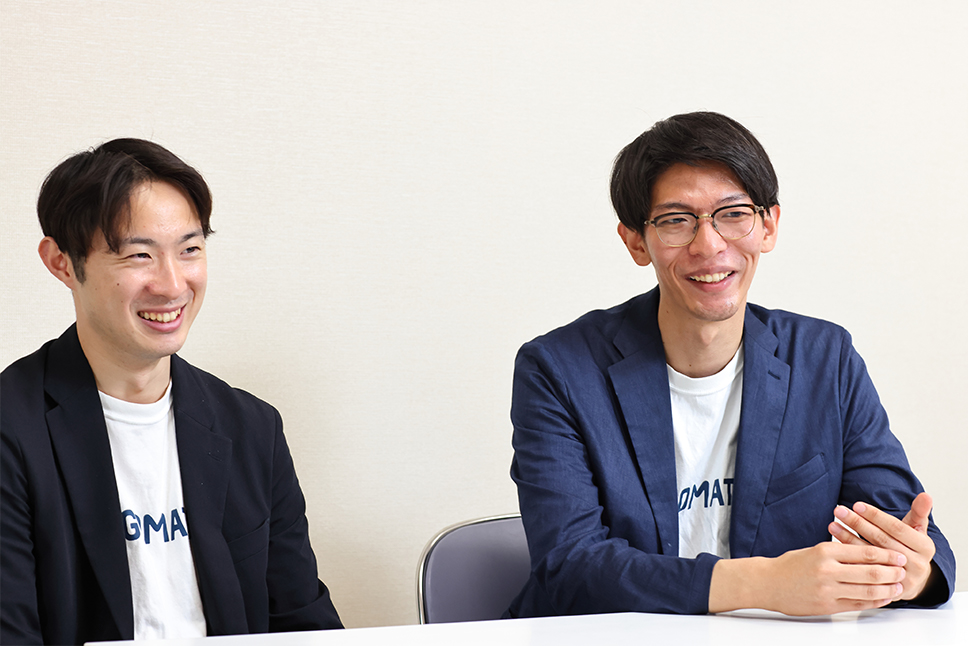
Founded in April 2023, Algomatic offers multiple AI agent-based services, including customer acquisition, talent acquisition, and creative generation. The company also supports the in-house development of AI agents.
Mr. Kobayashi noted that, through participating in this business matching event for the first time, he “reconfirmed the demand for domestically developed AI.” He explained, “At present, many companies rely on overseas-developed models such as ChatGPT through APIs. However, this also entails security risks. Through discussions with various companies at this event, I strongly sensed the high level of interest in domestically developed AI.”
Mr. Kamoi commented on the strong response: “While many of the other GENIAC-selected companies focus on developing domestic LLMs, we, as an application company, came prepared with a range of solutions that can be deployed immediately. As these solutions can address pressing challenges such as labor shortages, our booth attracted significant interest, and we were able to connect with companies across a wide range of industries.”
“Many companies approached us with requests to develop and operate AI agents in-house, and we felt that there was strong interest in leveraging our technical capabilities to support AI development,” said Mr. Kobayashi.
Regarding expectations for the next event, Mr. Kamoi stated, “As a startup originating from Japan, building connections with a wide range of companies is essential to compete globally. To that end, we would like to make full use of in-person opportunities like this event and continue to value such occasions.”
Interviews with Participating Companies
Comments from user companies that participated in the fourth business matching event are presented below, including ITOCHU Techno-Solutions Corporation, SBI Investment Co., Ltd., Nomura Research Institute, Ltd., and Benesse Corporation.
A Valuable Opportunity to Connect with a Wide Variety of AI Companies
ITOCHU Techno-Solutions Corporation
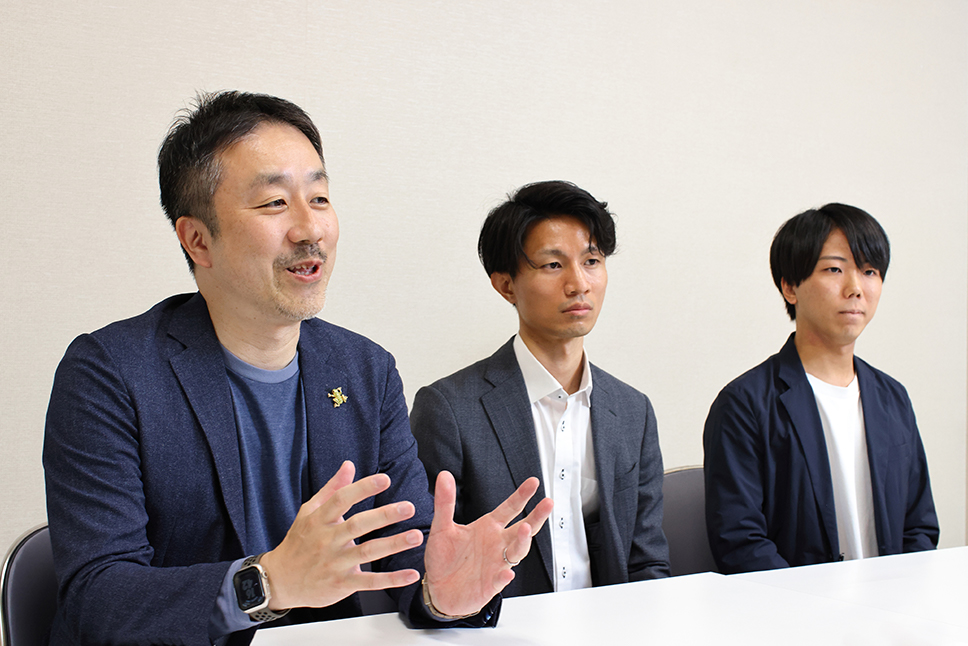
ITOCHU Techno-Solutions Corporation, as a major system integrator, addresses a wide range of challenges faced by companies through technology.
“Recently, demand for AI utilization among companies has been rising significantly, and we have been receiving a wide variety of inquiries. One of our services is to connect clients with the most suitable AI companies based on their specific challenges, which is why we participated in today’s business matching event,” said Mr. Terasawa.
Reflecting on the outcomes of the event, Mr. Akimoto highlighted that “it was a great achievement to connect with GENIAC-selected companies that have strengths across a wide range of fields,” adding, “for example, having the opportunity to speak with the Japan Agency for Marine-Earth Science and Technology, which utilizes meteorological data, was both refreshing and stimulating.”
Mr. Tamura commented, “There are cases where there is a gap between cutting-edge AI development and the actual challenges companies face. While we are also involved in development, this event provided a valuable opportunity to better understand the roles expected of us, such as tuning, and was a highly insightful experience.”
Building on this, Mr. Terasawa added, “Even when it comes to tuning, overseas foundation models still have limitations in Japanese language capabilities. The advancement of domestically developed generative AI will contribute to the broader adoption of generative AI across Japan, and we believe that GENIAC’s support is highly meaningful.” At the same time, he noted, “While there were many initiatives focused on domain-specific LLMs, some are still under development, and there were relatively few that could be utilized immediately. We will continue to monitor the progress of each company with great interest.”
Conditions for the Growth of Japan’s Generative AI Startups from a VC Perspective
SBI Investment Co., Ltd.
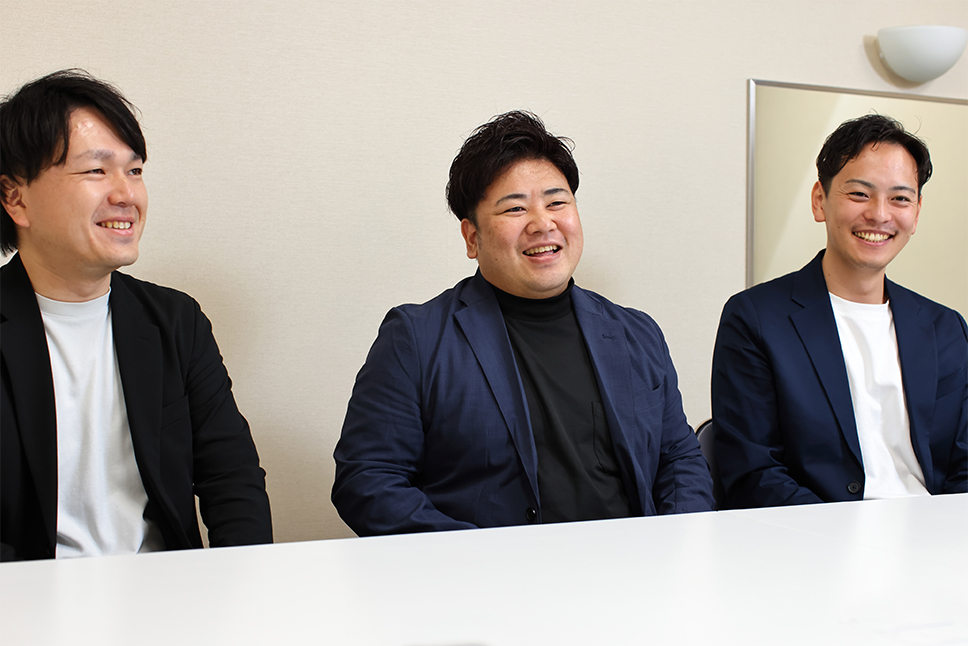
Mr. Maruyama, Mr. Kono, and Mr. Suzuki of SBI Investment shared their impressions of the event from the perspective of a venture capital firm engaged in investment and growth support for domestic generative AI startups.
“We have been involved in GENIAC as a member of the steering committee since March. Beyond providing funding to AI developers, one of the key roles of venture capital is to promote collaboration between our portfolio startups and established companies. We also intend to continue supporting awareness-building and networking efforts,” said Mr. Maruyama.
What should be done going forward to expand opportunities for startups to achieve social implementation? Mr. Maruyama noted that “it is necessary to create various points of contact, including collaboration with our LP (limited partner) companies.”
“In Japan, there is a structural challenge in that decision-making for business adoption tends to take time, which leads to slower scaling of startups and smaller funding sizes. GENIAC has the potential to be an opportunity to overcome this. For example, we would like to see consideration given to concrete support measures on the user side, such as designing incentives for companies to make quicker decisions regarding AI adoption and implementation,” he added.
Mr. Suzuki pointed out that “only a limited number of AI startups are able to capture the interest of user companies with their products alone,” and stated, “our role is to bridge that gap by fully leveraging our knowledge and ideas.” He also emphasized that startups that can articulate “which use cases they should target,” rather than being driven solely by their products, will be increasingly important. He added that it is essential for Japan’s generative AI industry as a whole to shift toward a “future-oriented mindset,” and for each player to align their direction.
Regarding the competitive advantages of Japanese generative AI companies, Mr. Kono commented that “a model in which large corporations and startups collaborate to jointly develop solutions and expand globally is a unique strength of Japan.” Mr. Suzuki further noted that “in Japan, where the manufacturing sector is strong, the intersection of AI, manufacturing, and robotics is an area where domestic startups have a competitive edge.” He expressed expectations that the integration of technology and domain expertise in specific fields will become a key differentiator in global competition.
As for further expectations toward GENIAC-selected companies, Mr. Maruyama stated, “the purpose of adopting generative AI is not simply to use it. If companies and startups collaborate with a multifaceted perspective on which markets to target and how to connect it to business outcomes, there is significant potential to create outstanding use cases originating from Japan.”
The Potential of Generative AI Collaboration with a View to Business Implementation: The Technologies and Agility Sought by NRI
Nomura Research Institute, Ltd. (NRI)
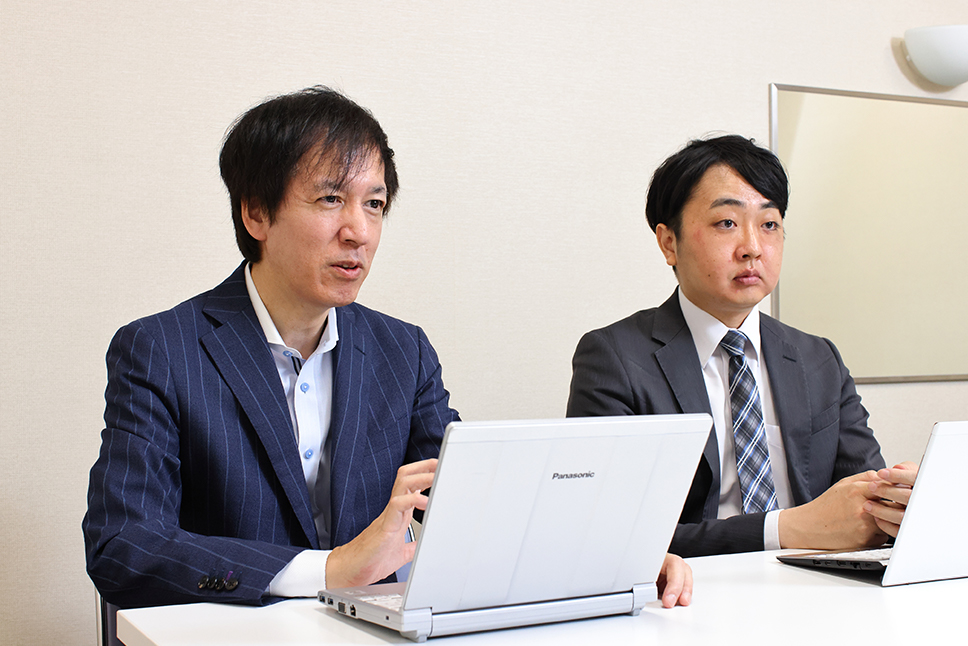
Nomura Research Institute, Ltd. (NRI), from the perspective of a system integrator implementing generative AI into end-to-end business processes, has shown strong interest in co-creation with companies selected under GENIAC. Regarding their evaluation of these companies, Mr. Nakamura commented, “We ourselves are developing industry-specific generative AI, but we have high expectations for the speed and technical capabilities of startups.”
“Through GENIAC, we were able to meet many companies that offer solutions aligned with the specific needs of our client companies, such as players developing AI agents specialized in particular tasks. Going forward, we aim to further identify companies that possess advanced technologies that can be flexibly integrated into business operations,” said Mr. Nakamura.
Regarding this business matching event, Mr. Nakamura and Mr. Ban described it as a valuable opportunity to connect with advanced startups all at once. They noted that, as a closed event, it enabled direct communication with key individuals such as founders, facilitating smooth and effective exchanges.
“For example, it was highly meaningful to exchange views with companies that have strengths in chart and diagram recognition technologies, as well as those with industry-specific LLMs. We see significant potential for future collaboration with these companies, particularly in system development with a view toward social implementation and in supporting deployment following proof-of-concept (PoC),” said Mr. Ban
Mr. Nakamura added, “The generative AI industry is evolving extremely rapidly, and opportunities to understand the current state of development are more important than annual reports. We hope that ongoing information sharing, real-time disclosure of progress, and communication regarding the status of social implementation will continue to be actively promoted.”
Both also noted that the “selection” process itself serves as a useful filter, making it easier for them and their clients to understand the companies participating in the GENIAC project.
As for expectations for the future of GENIAC, Mr. Ban highlighted the importance of establishing standardized evaluation metrics and benchmarks for domestically developed AI models based on business use cases. He expressed hope that, through information such as implementation track records of selected companies and comparisons with advanced overseas models like GPT-4, more compelling and informed adoption decisions can be made.
The Challenge Is Development Cost: Seeking Partners Who Can Help Address It
Benesse Corporation
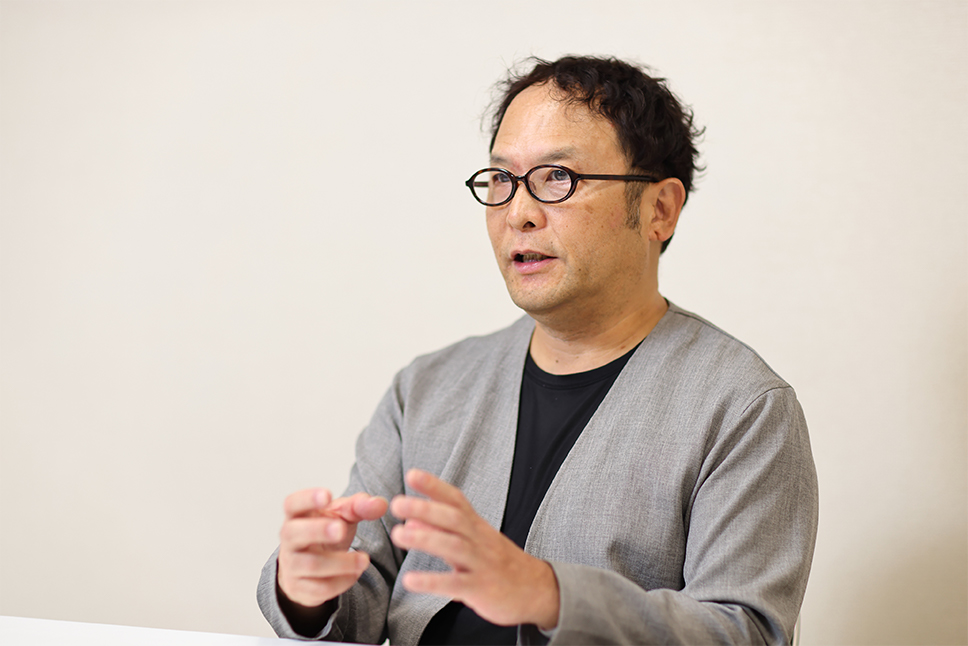
Benesse Corporation, known for its correspondence-based learning program “Shinken Zemi” for elementary, junior high, and high school students, operates a wide range of businesses beyond education, including senior care homes, childcare facilities, and employment support services. Within these businesses, the company is actively promoting the use of digital technologies to enhance services and improve operations.
“In 2023, we rolled out our in-house AI chat system ‘Benesse GPT’ to approximately 15,000 employees across the group. I believe our company-wide adoption of generative AI was among the fastest in Japan, second only to the Panasonic Group,” said Mr. Otsuka.
The company said it participated in the business matching event in order to address cost-related challenges.
“Currently, we provide AI services based on OpenAI’s foundation models, but customization requires enormous costs. Additionally, when offering AI services to customers, cost remains a major hurdle. We participated in today’s business matching event in hopes of finding solutions to these challenges,” he explained.
The company is seeking Japanese firms that could become AI partners and is even considering the possibility of using AI to support the “Akapen Sensei” (red-pen grading instructors) for “Shinken Zemi.” He also shared that “our call centers are very large in scale, and we aim to improve operational efficiency by leveraging generative AI to reduce workload.”
Reflecting on the event, which he had also attended previously, Mr. Otsuka commented, “It is somewhat regrettable that this is a closed event. The initiatives of the GENIAC-selected companies are diverse and all highly impressive. I believe it would be beneficial to open such opportunities more broadly so that more companies can learn about these activities.”
Overview of Presentations by Developers
An overview of the presentations delivered by developers on AI foundation models is provided below.
Transforming the Workplace with Japanese LLMs: Future’s Generative AI Strategy
Future Corporation
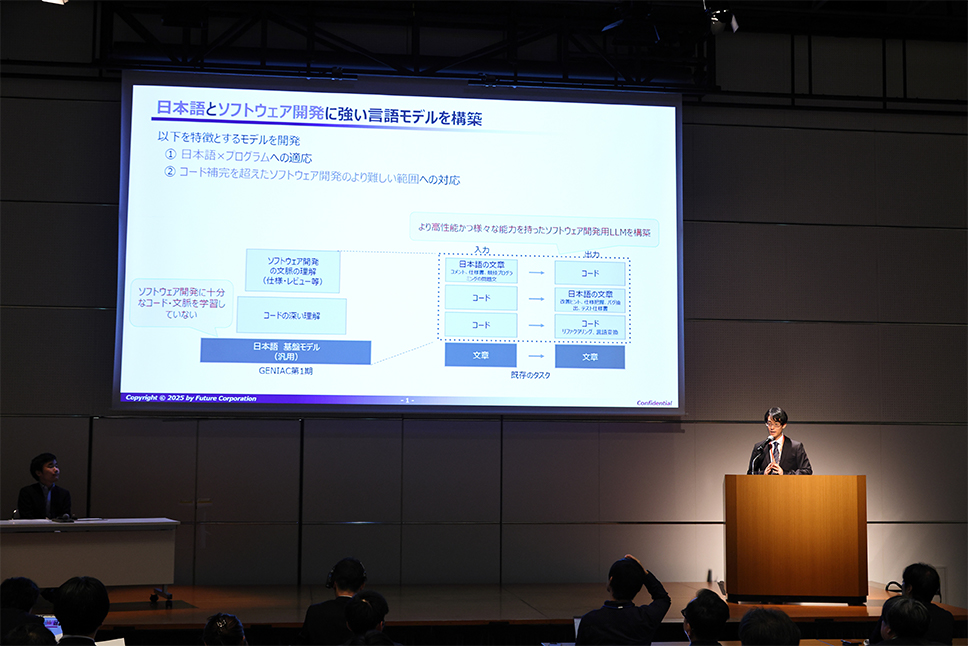
Future, an IT consulting firm listed on the Tokyo Stock Exchange Prime Market, provides support ranging from the formulation of management strategies to business process improvement and system development. Under the GENIAC program, the company is focusing on the development of foundation models with strengths in Japanese, particularly advancing the development of LLMs specialized in the software development domain. Compared to conventional general-purpose models, these models are characterized by a deeper understanding of code, as well as improved accuracy in generating code from Japanese and in generating natural language from code. Recognizing that not only coding but also design and documentation creation place significant burdens on actual software development environments, the company aims to develop models capable of supporting these process-related tasks as well.
In some tasks, performance exceeding that of existing models such as LLaMA has been confirmed. To address needs such as handling legacy code like COBOL, complex design documents, and system modernization, the company is promoting comprehensive support by combining Japanese LLMs with its own expertise in software development.
High-Precision Generation and Misinformation Countermeasures Using a Proprietary Architecture
DATAGRID Inc.
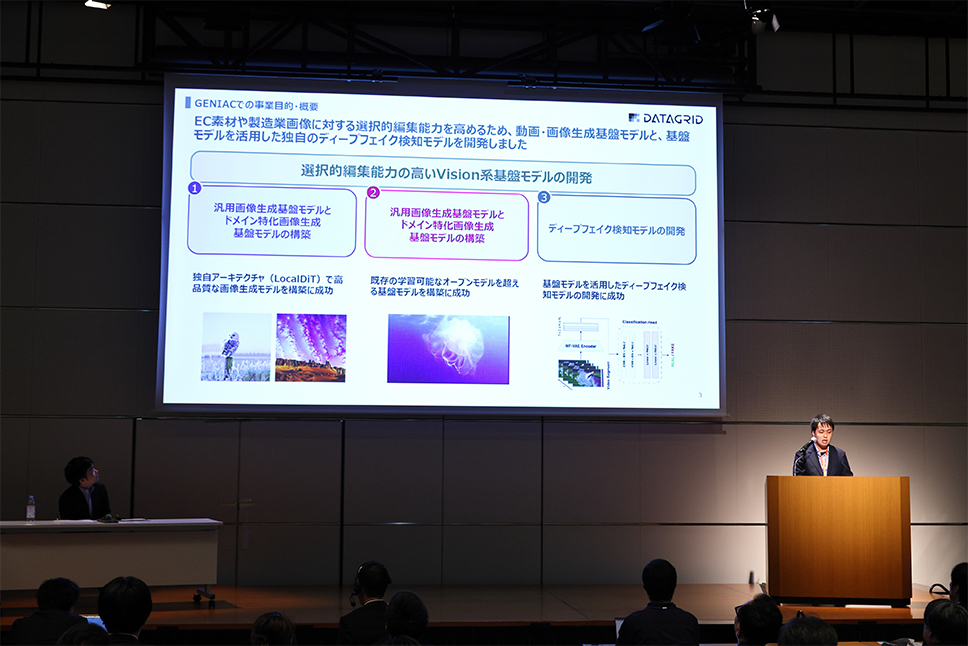
DATAGRID is a startup originating from Kyoto University that develops vision-based generative AI. The company conducts research and development of AI foundation models specialized in image and video generation as well as deepfake detection. With support from GENIAC, it is developing both general-purpose and domain-specific generative models with strengths in selective editing of image materials for e-commerce and manufacturing. By leveraging its proprietary architecture “LocalDiT,” the company has achieved performance surpassing existing open-source models. It has also built deepfake detection models using this technology, promoting high-precision AI applications in the visual domain.
Looking ahead, the company aims to build industry-specific generative AI platforms for sectors such as advertising and manufacturing based on these technologies, and to deliver solutions through collaboration with partner companies while advancing broader social implementation.
Transforming Food and Retail Operations: NABLAS’s Generative AI Analytics Capabilities
NABLAS Inc.
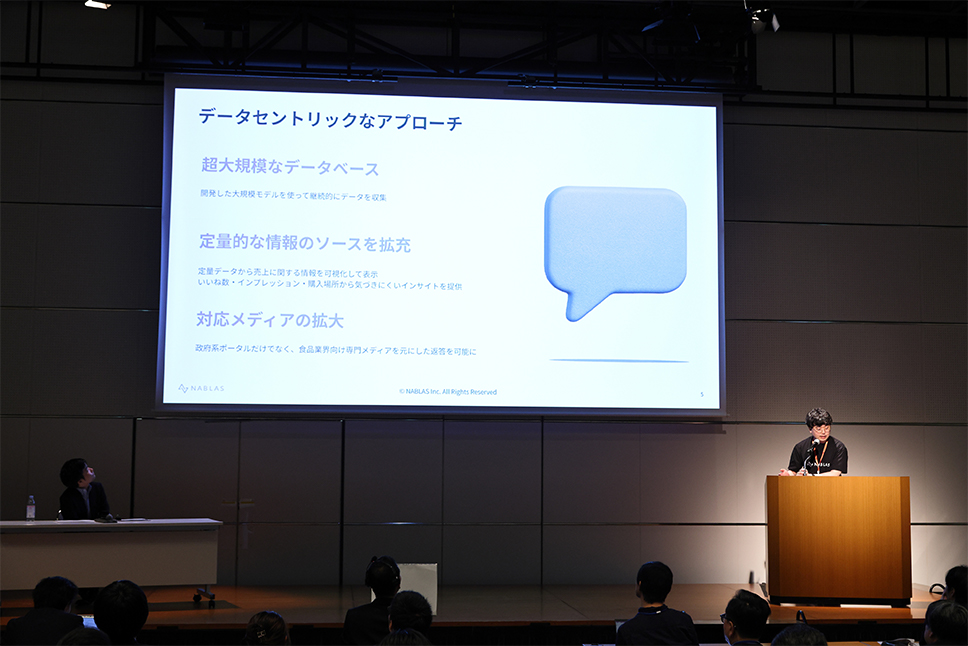
Mr. Shintate of NABLAS presented the development of services supporting qualitative and quantitative analysis using generative AI. The company provides AI services that address a wide range of business needs—primarily in the retail and food sectors—including sentiment analysis, competitive research, demand forecasting, risk detection, and proposal document creation.
By continuously collecting information from public data sources, social media, and specialized media, NABLAS enables advanced analysis through its proprietary vision-language model “NABLA-VL” and its food-specialized model “NABLA-VL.food.” In particular, through fine-tuning using approximately 6,000 annotated food-related data samples, the models support applications such as recipe prediction and the generation of product descriptions. In addition, the company offers dashboards and watchlist functions for enterprises, as well as capabilities such as influencer analysis, providing a broad range of services centered on the food domain.
Driving Business Innovation with AI That Reads Charts and Diagrams: Ricoh’s LMM Strategy
Ricoh Company, Ltd.
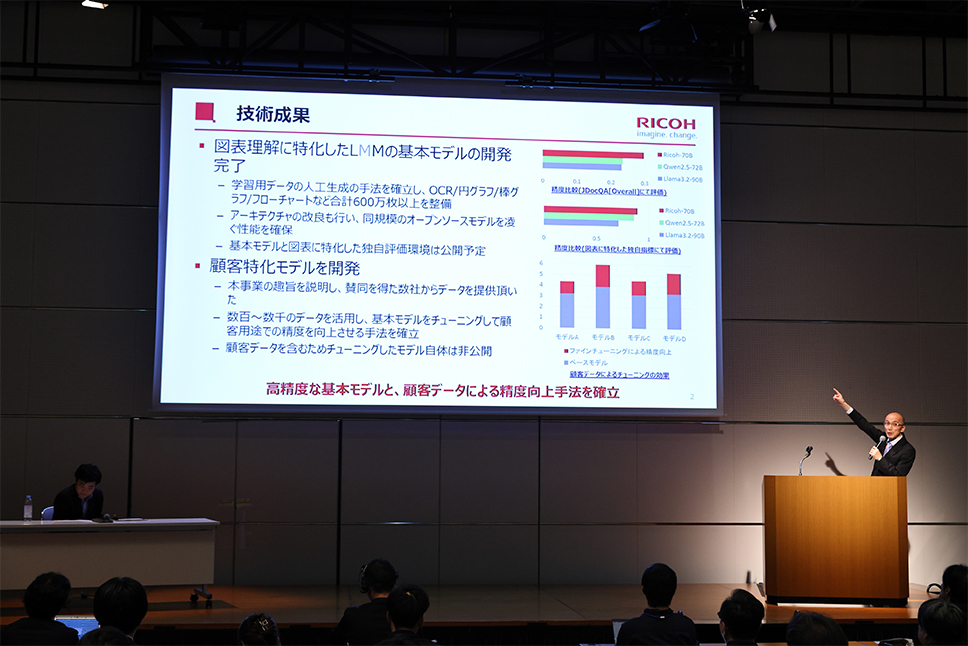
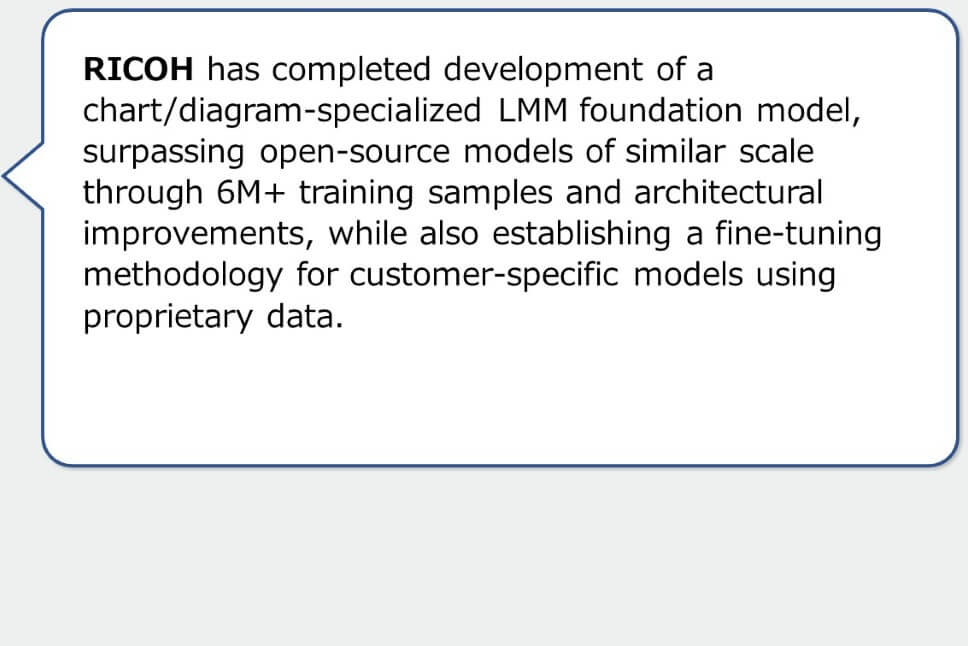
Mr. Hasegawa of Ricoh introduced the company’s efforts to develop large multimodal models (LMMs) with strong capabilities in understanding charts and diagrams, aiming to effectively utilize the vast volume of internal documents and visual materials accumulated within enterprises. Traditionally, much of this data has remained underutilized due to its sheer volume, but Ricoh is building mechanisms to extract such information using generative AI in formats such as chat interfaces. By leveraging approximately 6 million OCR-processed visual elements—including pie charts, bar graphs, and flowcharts—and applying a proprietary architecture, the company has achieved accuracy surpassing that of open-source models of comparable scale.
Ricoh is particularly focused on the social implementation of chart and diagram understanding technologies. The company is already collaborating with multiple firms on fine-tuning and has established methods for building high-precision private LLMs tailored to specific business operations. Going forward, it aims to accelerate commercialization by developing models of practical size, thereby contributing to improved operational efficiency and enhanced competitiveness of Japanese companies.
Transforming Document Processing: The Capabilities of a Lightweight and High-Speed LLM
AI inside Inc.
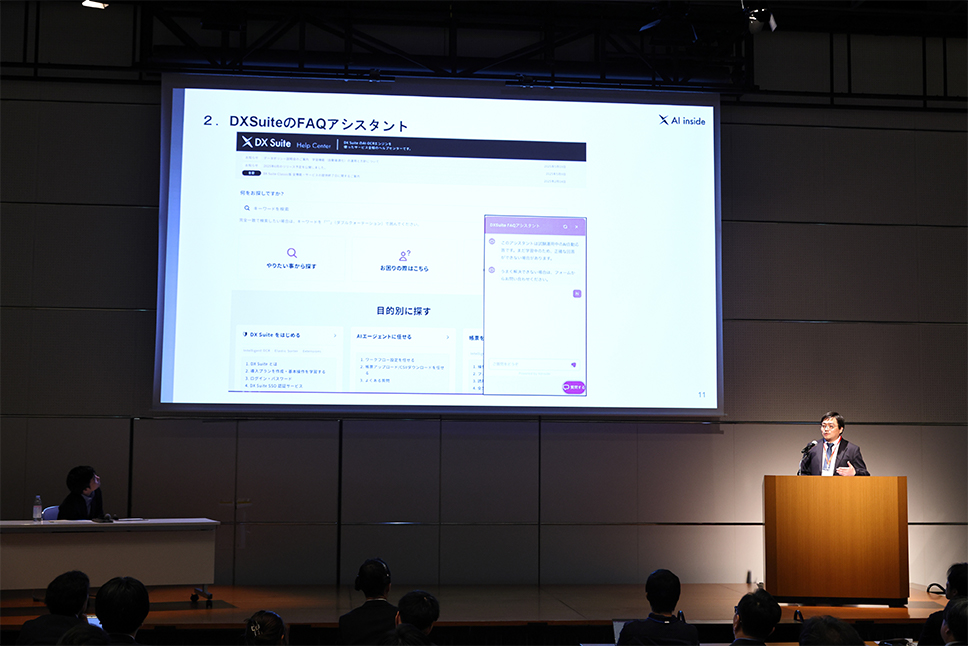
AI inside is advancing the development of AI-OCR technology specialized in Japanese document processing, along with self-learning models. Since its founding, the company has focused on structuring documents and currently maintains a leading market share in the OCR market.
Under the GENIAC project, the company developed “PolySphere,” an LLM that achieves world-class accuracy in reading 50 types of documents. In addition, it has built a lightweight, high-speed model “SLM,” which reduces processing time to one-third and compresses model size to one-quarter compared to conventional models.
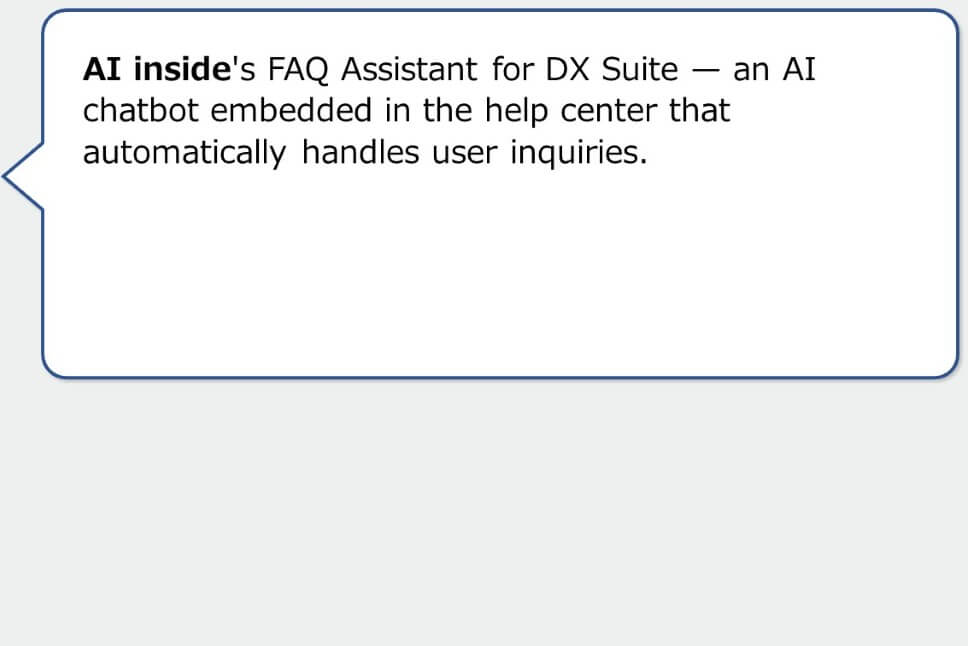
These technologies have been implemented in the company’s flagship product “DX Suite,” which has already been adopted by approximately 3,000 companies and 60,000 users. The system also incorporates an autonomous distillation mechanism that improves accuracy based on usage data, enabling continuous cost reduction and operational optimization. Furthermore, AI agents have been deployed in areas such as export control compliance and FAQ handling, addressing a wide range of business challenges.
Unlocking the Value of Hidden Knowledge through Generative AI
Stockmark Inc.
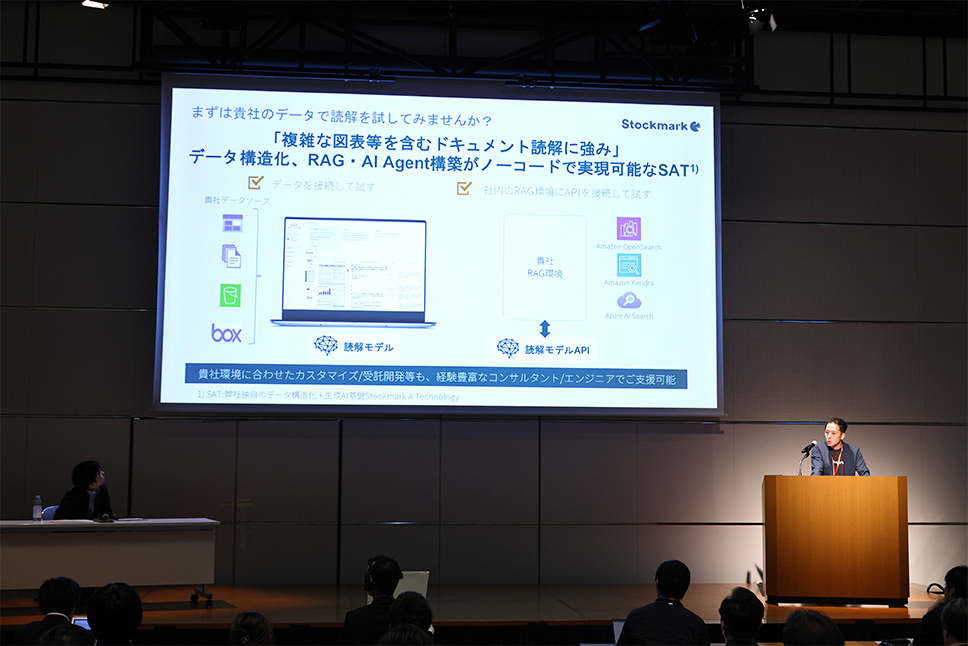
Stockmark supports business transformation and information utilization for companies through its Japanese business-focused generative AI “Stockmark LLM” and its knowledge utilization SaaS “Anews.” To address the challenge that vast amounts of internal knowledge and complex chart-based materials are not being fully utilized, the company has developed proprietary models with strengths in structuring documents and visual materials. By organizing data such as sales materials, manufacturing instructions, and manuals, and integrating them into RAG and AI agents, it enables improved operational efficiency and decision-making support in the field.
The company possesses one of the largest business data platforms in Japan and has an extensive track record. It offers flexible integration with existing systems via APIs and supports deployment in both on-premises and cloud environments. In addition, it provides no-code chat and document coaching functions, as well as implementation support by experienced engineers and consultants. Rather than merely extracting information, the company emphasizes proposal capabilities and the creation of new value through data utilization.
Next-Generation Animation Production Models Enabled by Video Generative AI
AIdeaLab Inc.
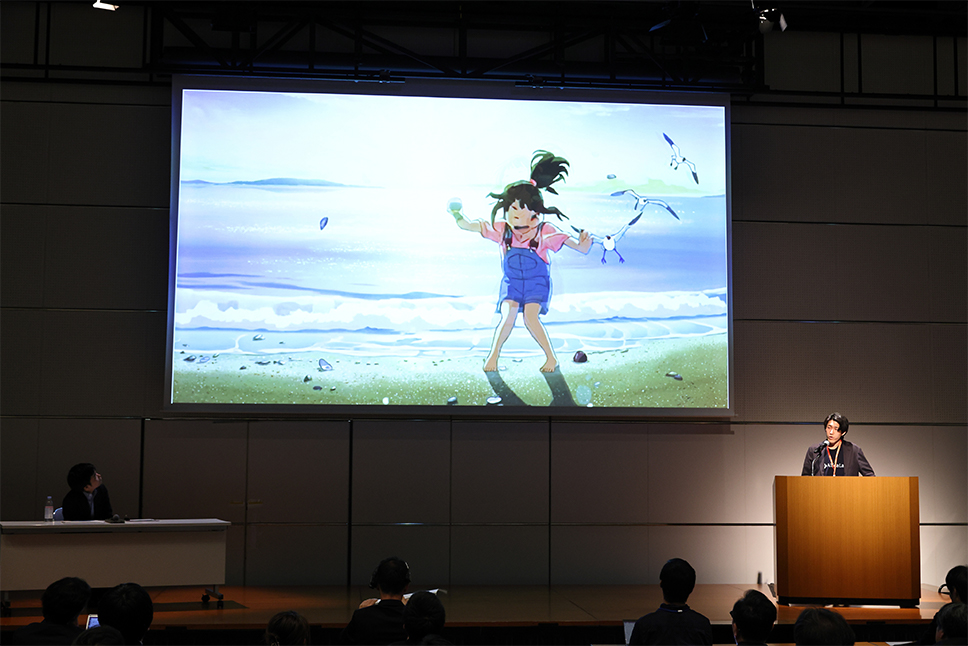
AIdeaLab develops and deploys video generative AI foundation models and platforms specialized in anime and illustration, areas in which Japan has particular strengths. The company is a startup originating from an AI research lab at the University of Tsukuba and has previously launched innovative generative AI products such as “AI Hiroyuki.”
Under the GENIAC project, it has built a lightweight yet high-performance video generation model trained on data free from copyright risks. Through fine-tuning specialized for the animation domain, the model has achieved performance up to 70% higher than existing global video generative AI models. The company is currently incorporating these results into a commercial platform, aiming to expand into practical use cases such as video content production, generating animations from storyboards, and supporting the production of commercials and TV dramas. In addition to image and video generation, it also proposes applications in areas such as LLMs, RAG, and virtual agent development, with a view to providing advanced generative AI solutions through collaboration with companies.
From Animation Support to Process Transformation: Introducing AI into Animation Production Workflows
OLM Digital, Inc.
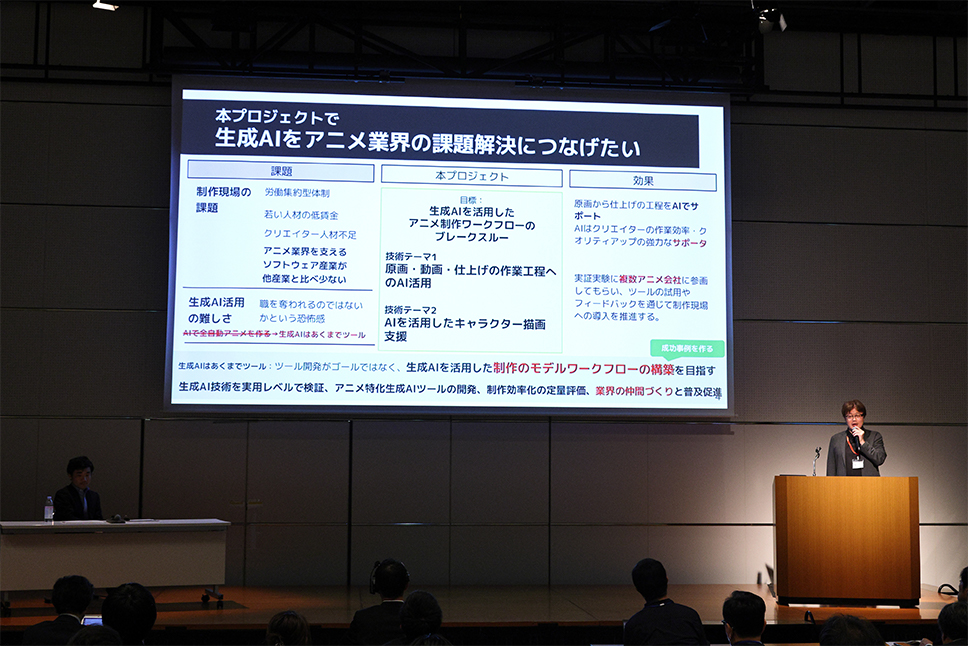
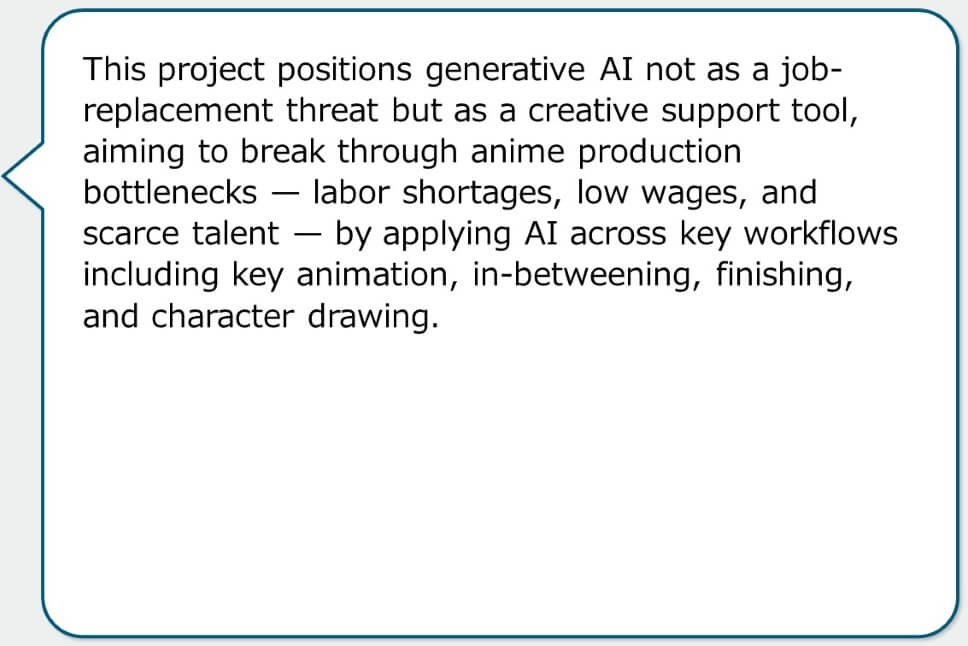
OLM Digital is working under the GENIAC project to build a model workflow for animation production using generative AI. The company, which is engaged in CG animation and live-action VFX, defines generative AI as “one of the tools to support creators” and aims to transform the entire production workflow through its utilization in animation production environments.
In the “ANIMINS” project, it has established a collaborative framework among academia, industry, and government—including nine universities, startups, and major animation studios—and is currently demonstrating the potential of AI applications in processes such as key animation, in-between animation, finishing, and character drawing. Key outputs include AI tools for animation support and similar-cut search, the establishment of efficiency metrics specialized for animation production, the sharing of demonstration results across multiple companies, and the development of reproducible production models for the industry as a whole. The company is also actively promoting the dissemination of successful case studies, including presentations at international conferences, with the aim of improving productivity and quality in the animation industry.
Driving Inbound Tourism DX with Multilingual LLMs
Ubitus K. K. / [Co-proposer] Deepreneur Inc.
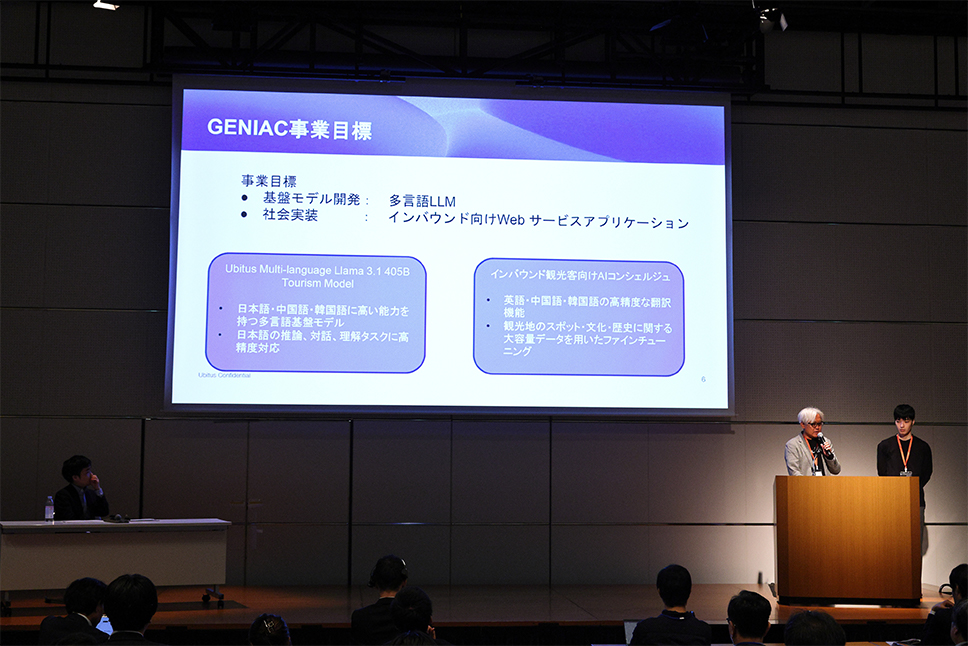
Yuta Sawada, CEO, Deepreneur Inc.
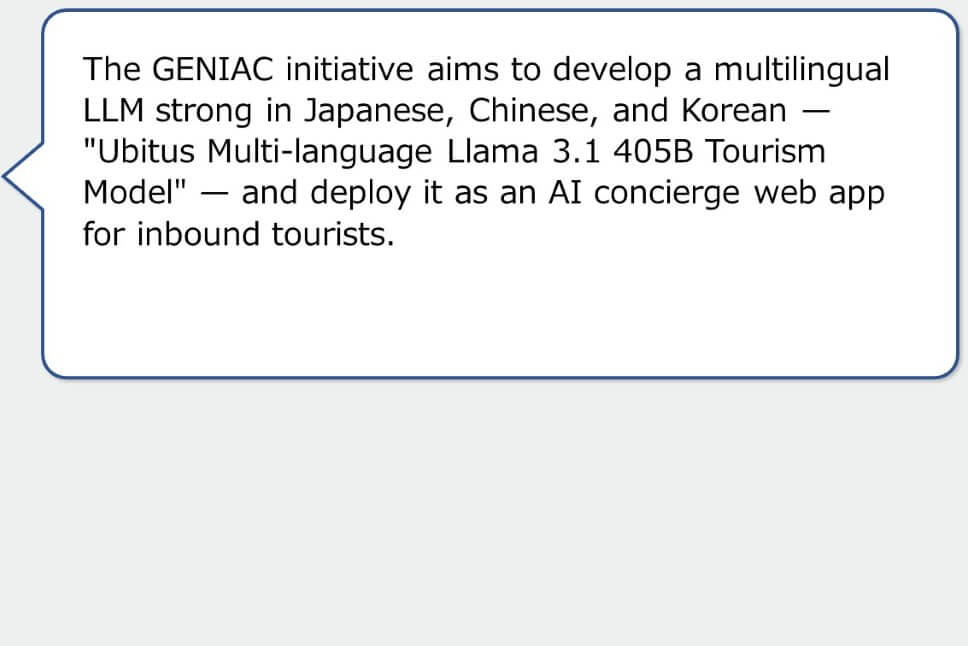
Ubitus and Deepreneur are jointly developing a multilingual LLM with strong capabilities in East Asian languages. Deepreneur primarily leads the development of the Japanese model, conducting high-precision fine-tuning based on various benchmarks such as “Japanese MT-Bench.”
In this project, they are building a large-scale tourism dataset and developing an “AI concierge for inbound tourism” that can be utilized in multiple languages. The service is designed to support all phases of travel—before, during, and after trips—enabling functions such as travel planning in English, Chinese, and Korean, booking of flights and hotels, voice translation, and tourist guidance. Going forward, demonstration experiments are planned in collaboration with multiple local governments.
Ubitus also owns its own data centers and storage infrastructure, enabling end-to-end services from model provision to operation at low cost. The company is also considering expanding into fields beyond tourism.
Visualizing Climate Change Risks: Evaluation AI Advancing TCFD Compliance
Japan Agency for Marine-Earth Science and Technology (JAMSTEC)
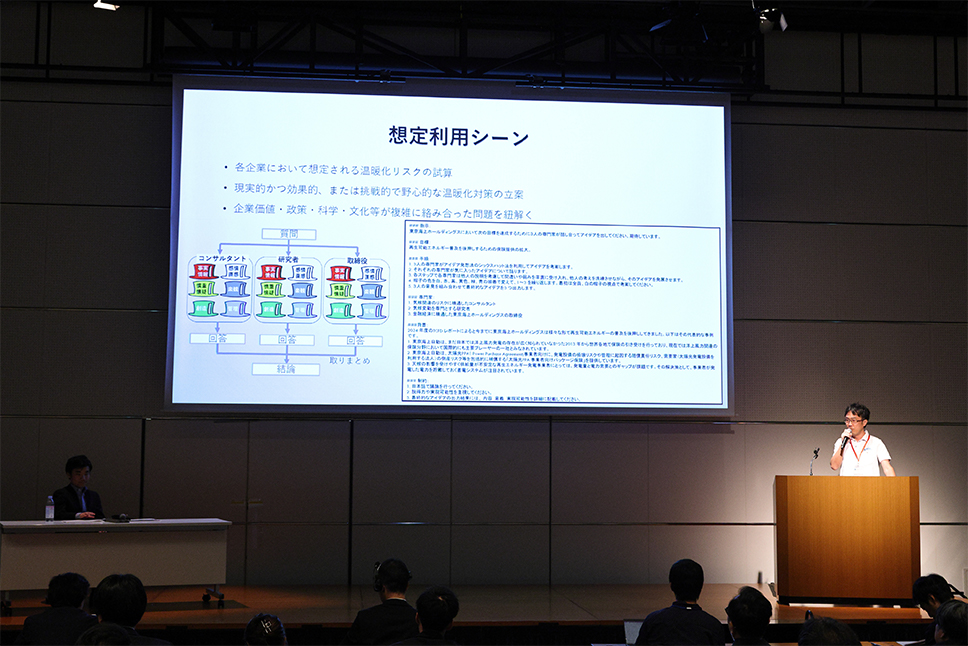
JAMSTEC is working on the development of a corporate risk assessment and mitigation support model that integrates scientific simulation with generative AI to address the impact of climate change risks on economic activities.
Annual economic losses due to global warming are estimated at approximately USD 250–400 billion, and companies are required to disclose risks and formulate strategic responses through TCFD reports. The generative AI model developed by JAMSTEC adopts a Llama 3.3–based LLM that continuously learns from knowledge in the fields of meteorology and earth sciences, achieving approximately 20% higher accuracy compared to GPT-4o. It quantitatively evaluates future risks for individual companies, supports the preparation of TCFD reports and proposes optimal response measures from multiple management perspectives.
The model is also gaining attention as a tool to support corporate sustainability strategies in environments where climate, economic, and policy factors intersect in complex ways, contributing to enhanced corporate value and sustainable growth in the era of global warming. Going forward, expansion into other fields such as local governments and the agriculture, forestry, and fisheries sectors is also planned.
Toward an Era of Voice-to-Voice Translation: The Cutting Edge of Real-Time Interpretation
Kotoba Technologies Japan, K.K.
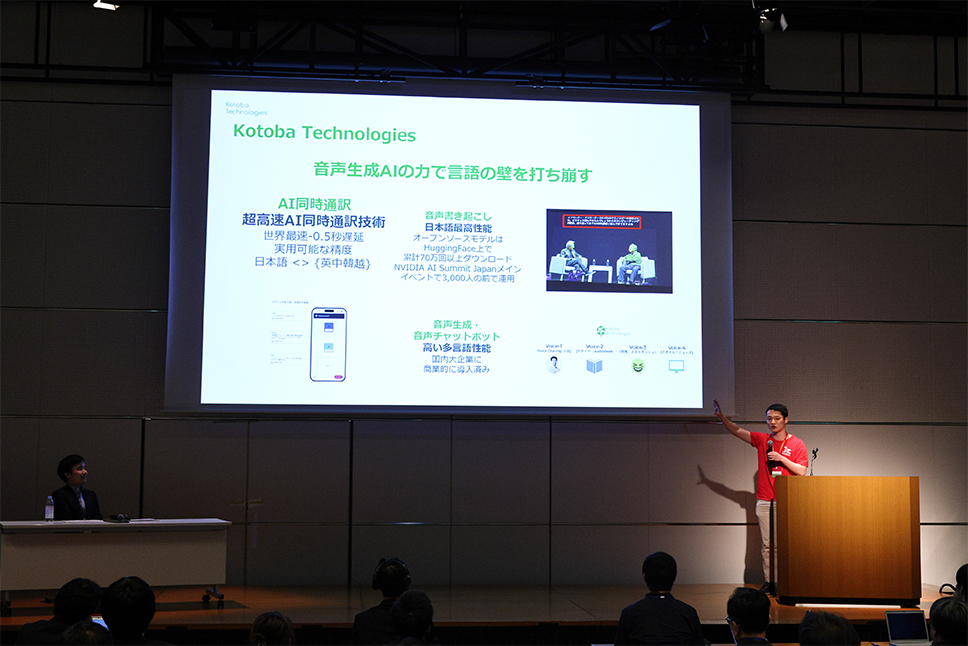
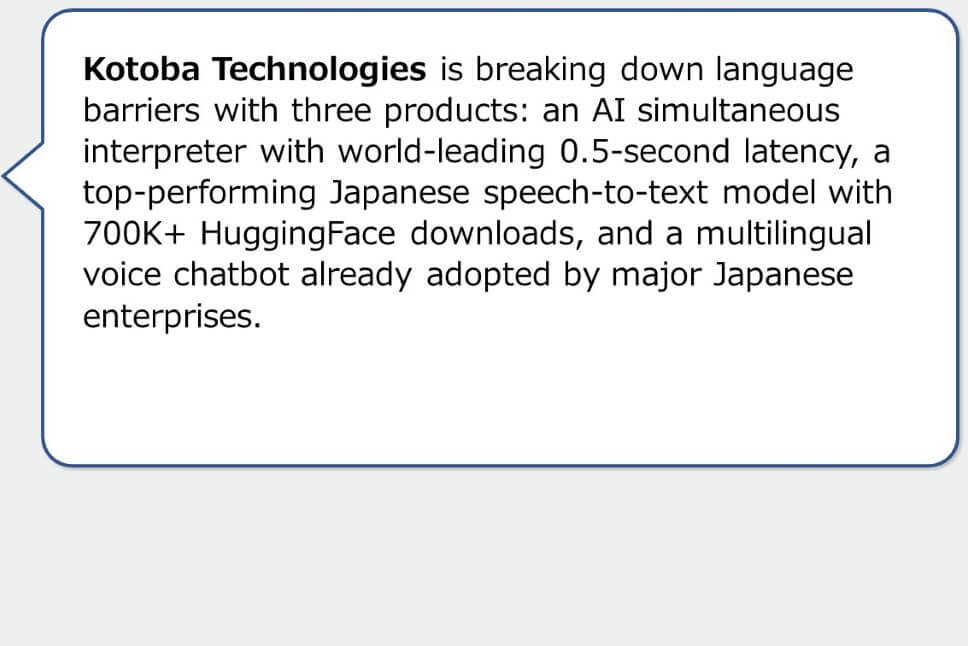
Kotoba Technologies Japan is advancing the social implementation of simultaneous interpretation and multilingual speech processing under the theme of “breaking down language barriers” by leveraging generative AI for speech.
Its proprietary ultra-fast AI simultaneous interpretation technology achieves both low latency of under 0.5 seconds and high accuracy, supporting multiple languages including Japanese, English, Chinese, Korean, and Vietnamese. The company has also developed voice cloning technology that enables translated output to be delivered naturally in the speaker’s own voice, as well as expressive generation capabilities such as news-style and announcer-style speech. A mobile application for simultaneous interpretation has already been released, achieving tens of thousands of downloads and being used daily by several thousand users. In 2023, the technology was deployed at a dialogue event between Masayoshi Son and Jensen Huang, and has also been used at NVIDIA AI Summit Japan. Adoption by major domestic companies is progressing, and with a view toward global expansion, the company is leading the development of voice generative AI technologies originating from Japan.
AI Agents That “Drive” Business Operations: Accelerating On-Site Implementation
Karakuri Inc.
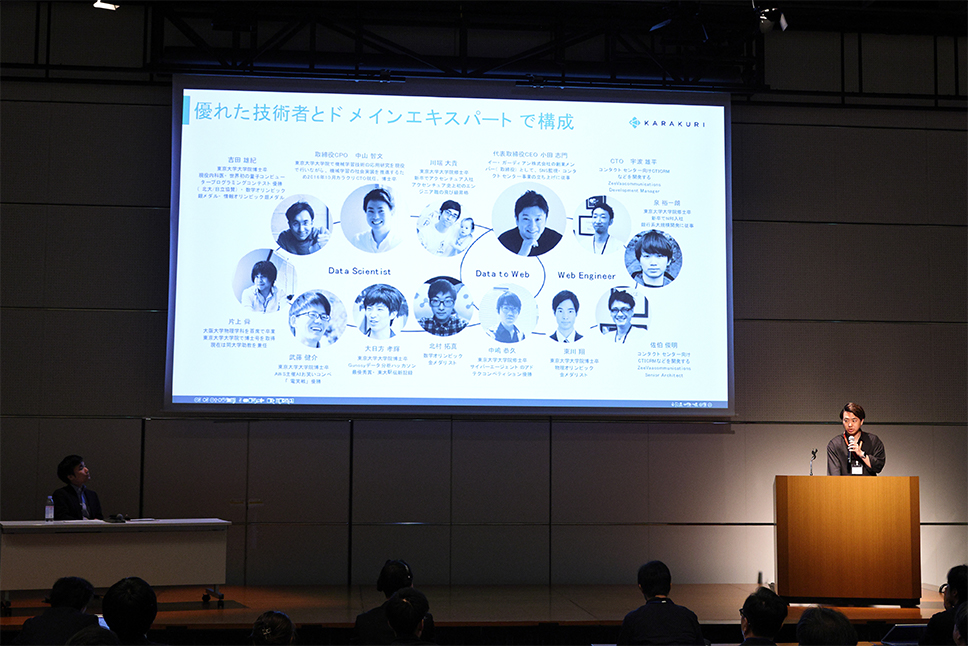
Karakuri, which provides AI SaaS specialized in customer support, has been continuously developing its proprietary large language model “KARAKURI LM” since its founding.
Under the GENIAC project, the company has developed a high-quality AI agent model with strong Japanese language capabilities and reduced hallucination. It has also implemented a multimodal model called “Computer Use,” which can recognize and operate PC screens in a human-like manner. This enables AI to carry out tasks on behalf of human operators in customer support tasks that typically involve handling an average of eight or more tools, significantly improving operational efficiency.
Karakuri’s strengths also include a team of highly skilled engineers and experienced industry professionals, as well as a cost-efficient development framework leveraging AWS Trainium. In Japanese image recognition, the company has achieved accuracy surpassing GPT-4o, and its technology has been made available through AWS Bedrock, gaining increasing international recognition.
A New Phase of Enterprise DX Driven by a Domestic LLM Adopted by 300 Companies
ABEJA, Inc.
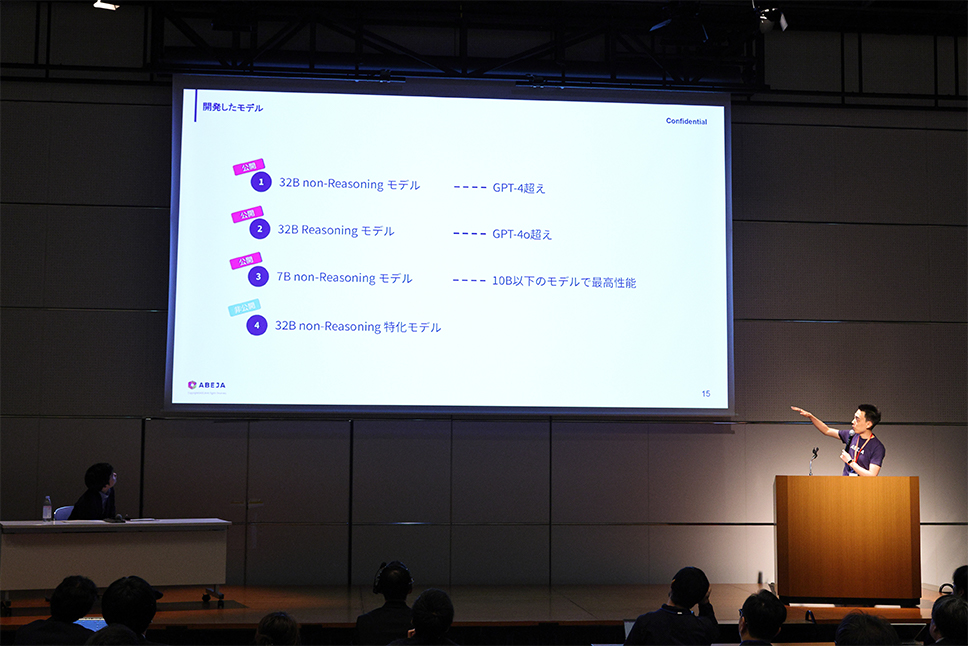
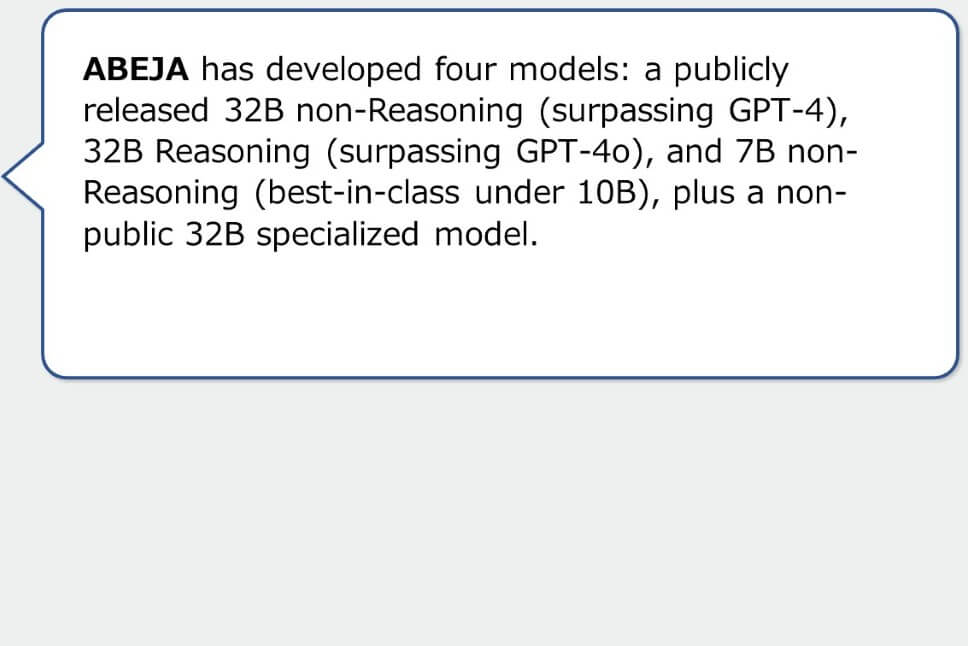
ABEJA addresses the challenges faced by large enterprises seeking to promote DX by leveraging internal expertise and operational know-how, using LLMs to provide solutions and support. In the second phase of GENIAC, the company developed high-performance, enterprise-specific LLMs, building 32B and 7B models that achieve performance surpassing GPT-4 and GPT-4o while balancing high response accuracy for specific tasks with model compactness.
By combining these models with RAG, ABEJA has realized an approach that enhances accuracy while keeping costs under control. Leveraging its strengths in proprietary model development and knowledge accumulation, the company provides end-to-end support for enterprise-specific LLM utilization. The ABEJA LLM series, designed for the generative AI era, has already been deployed in over 300 companies, with social implementation progressing across a wide range of industries including manufacturing, retail, and finance.
Balancing Flexibility and Accuracy: The Future of AI Utilization Envisioned by Domestic LLMs
Preferred Elements Inc. / [Co-proposer] Preferred Networks, Inc.
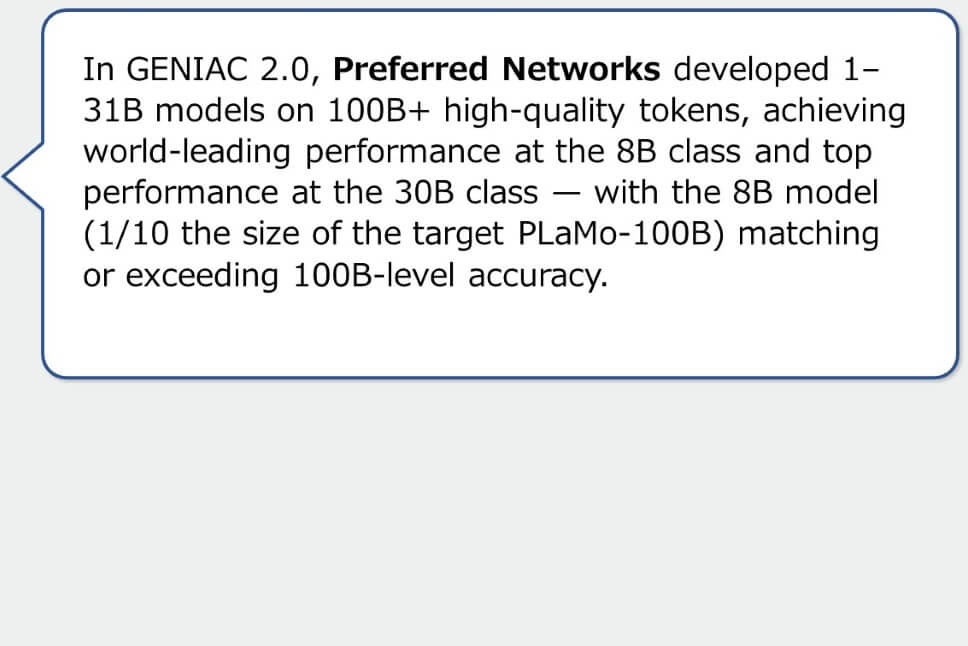
Preferred Networks is leading the social implementation of AI through vertical integration spanning AI chips, foundation models, and application services.
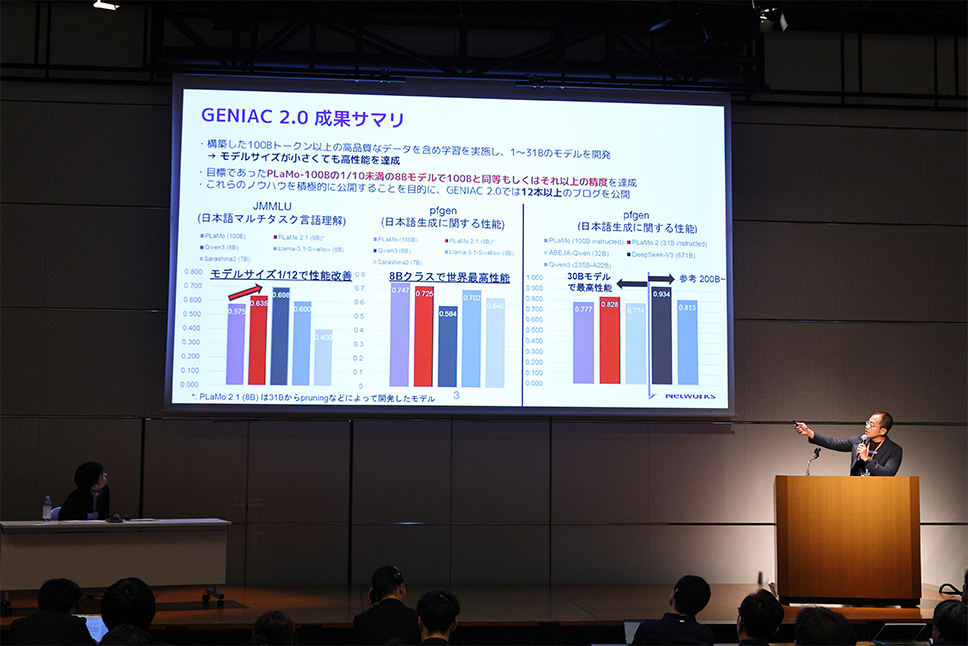
Under the GENIAC project, the company has developed the fully domestic, fully scratch-built LLM “PLaMo” series. Trained on over 100 billion tokens of high-quality data, the models achieve accuracy comparable to or exceeding that of 100B-class models despite their compact size of 8B parameters.
The models have been deployed in practical applications such as translation, meeting summarization, and enterprise AI solutions, and have been adopted by organizations such as SBI and local governments across a wide range of industries, including manufacturing, finance, and healthcare. In addition to API provision and on-premises deployment, usage via platforms such as AWS Bedrock is also expanding. Furthermore, by offering the models free of charge under a “Community License” that allows commercial use, the company has created an environment in which enterprises and developers can flexibly incorporate them into their own services. As a domestically developed LLM that combines both accuracy and flexibility, it is achieving both broad social implementation and the development of an AI ecosystem.
Eliminating Reliance on Individual Expertise through AI: Automating Both Operational Evaluation and Creative Work
Algomatic Inc.
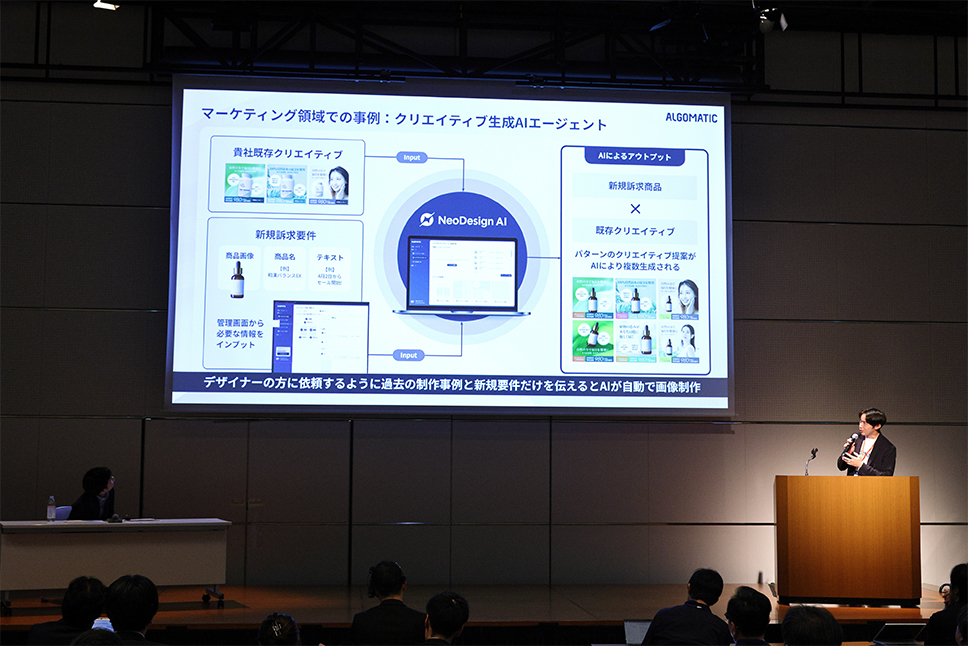
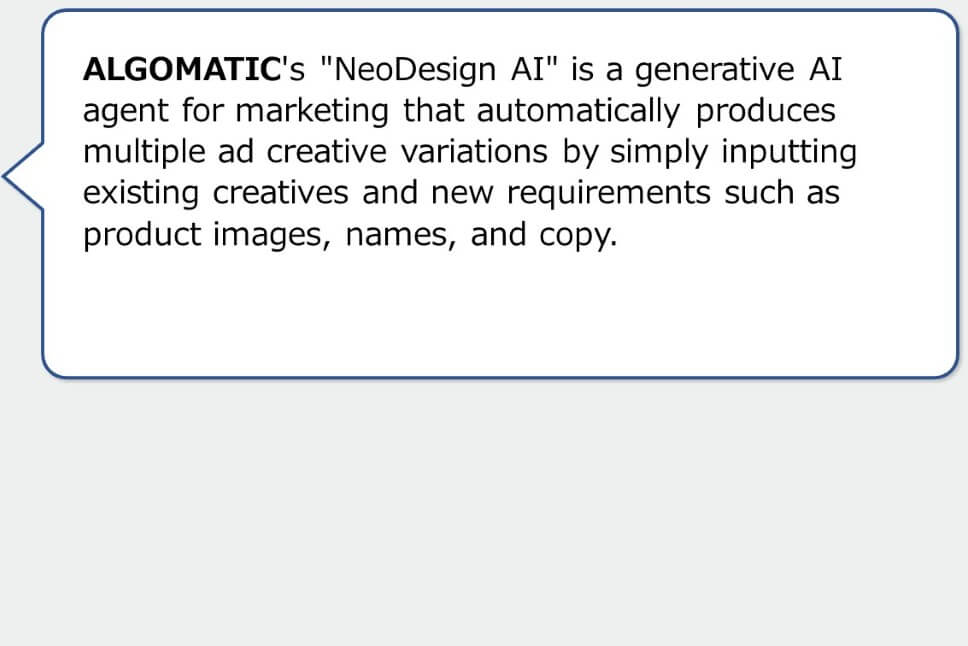
Algomatic supports business transformation across industries by leveraging AI agents. While developing multiple products, the company operates several businesses in parallel, including in sales and human resources. By promoting AI-driven transformation tailored to real-world challenges without being constrained by specific industries or sectors, it is strongly advancing the social implementation of AI technologies.
For example, in manufacturing settings, the company has achieved automated task evaluation through video analysis, addressing challenges such as reliance on individual expertise and the limitations of manual monitoring. In the marketing domain, it provides AI that automatically generates advertising creatives based on past materials and new requirements, significantly improving the efficiency and flexibility of the design process.
In addition, the company actively disseminates the latest use cases through its owned media and other channels, working to promote the adoption and integration of AI agents across a wide range of enterprises.
Deriving Drug Responses from Massive Data: A New Frontier in AI-Driven Drug Discovery
Humanome Lab, Inc.
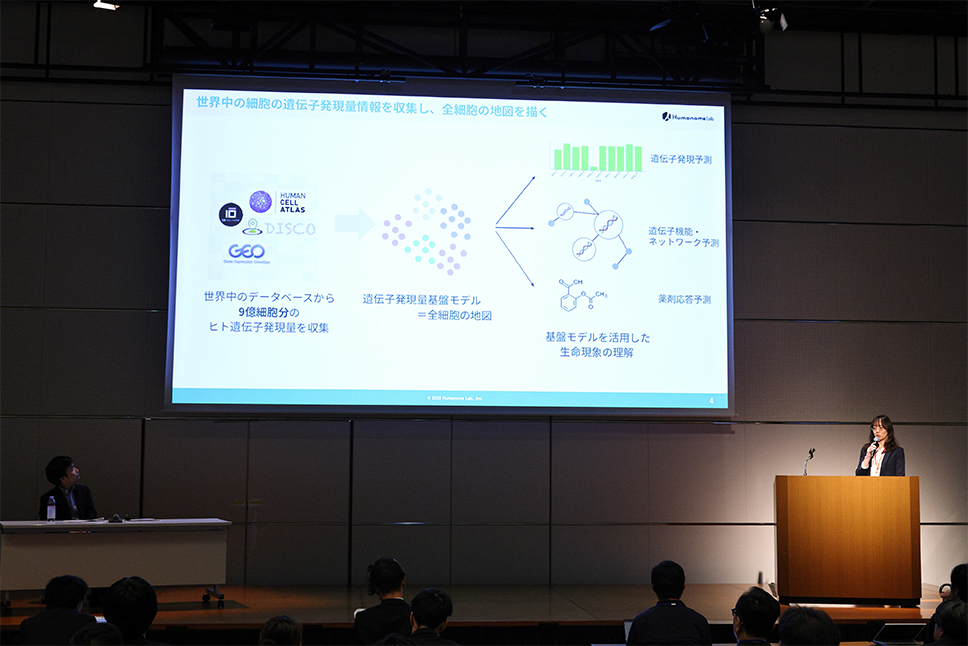
Humanome Lab is a research and development organization that supports drug discovery through AI technologies integrating life sciences and information science under the theme of “what it means to be human.”
Under the GENIAC project, the organization addresses the challenge of low clinical trial success rates in drug discovery by constructing a high-quality database of 300 million cells from gene expression data covering 900 million cells, and developing a foundation model with approximately 300 million parameters. Compared to conventional models, it has achieved an approximately 8% improvement in prediction accuracy. This foundation model is used for applications such as gene expression prediction and drug response analysis, contributing to the acceleration of drug discovery in the era of personalized medicine.
To date, the organization has advanced multiple real-world implementations, including AI-assisted research on new anticancer drugs, analysis of vital data from female cancer patients, and the development of diagnostic models for poultry diseases. Going forward, it aims to drive innovation in the medical and healthcare fields based on a deeper understanding of biological phenomena.
From Document Creation to Inconsistency Detection: Pharmaceutical LLMs Supporting Business Operations
EQUES Inc.
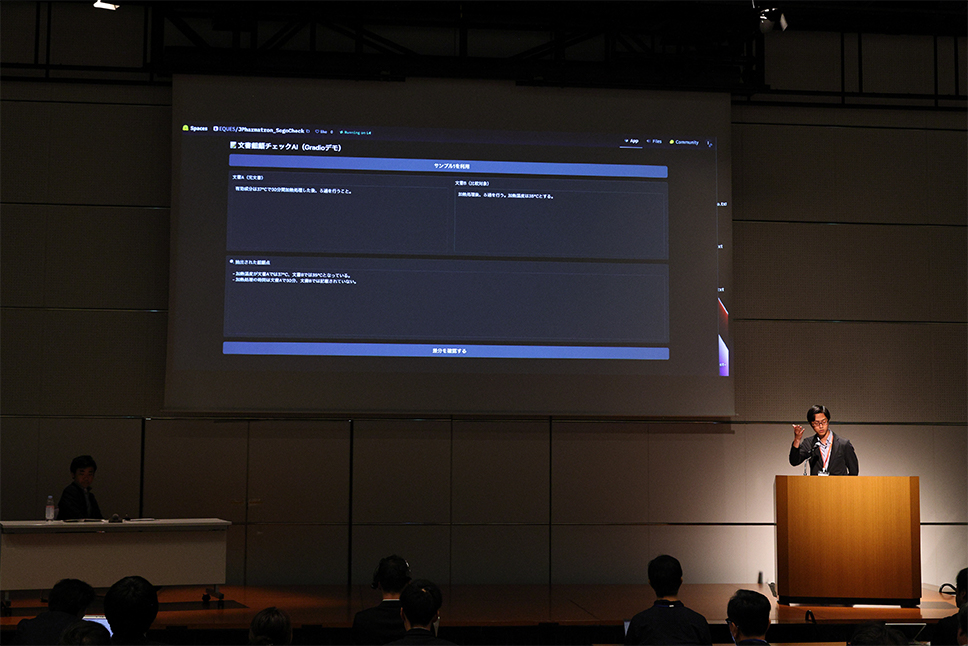
EQUES is an AI startup originating from the Matsuo Laboratory at the University of Tokyo, with strengths in mathematically driven research and development. It provides AI solutions across a wide range of industries, including manufacturing, construction, and retail, and under the GENIAC project, it is developing “JPharmatron-7B,” a large language model specialized in the pharmaceutical field.
The model is designed to achieve a level of expertise comparable to national pharmacist and medical licensing examinations, and is being used to develop AI tools that support tasks such as automatic generation of regulatory change application documents, manual creation, document review, semantic search, and fact-checking. It also aims to enable functions such as detecting inconsistencies between procedural documents and approval documents, and handling chat-based inquiries on drug interactions. Through these efforts, the company is working toward social implementation that balances improved efficiency in indirect pharmaceutical operations with the maintenance of high levels of expertise. The model and its preprint paper have been released, and going forward, the company aims to further promote its application in real-world operations as Japan’s first pharmaceutical LLM.
Competing Globally with Molecule-Specialized AI to Accelerate Drug Discovery
SyntheticGestalt KK
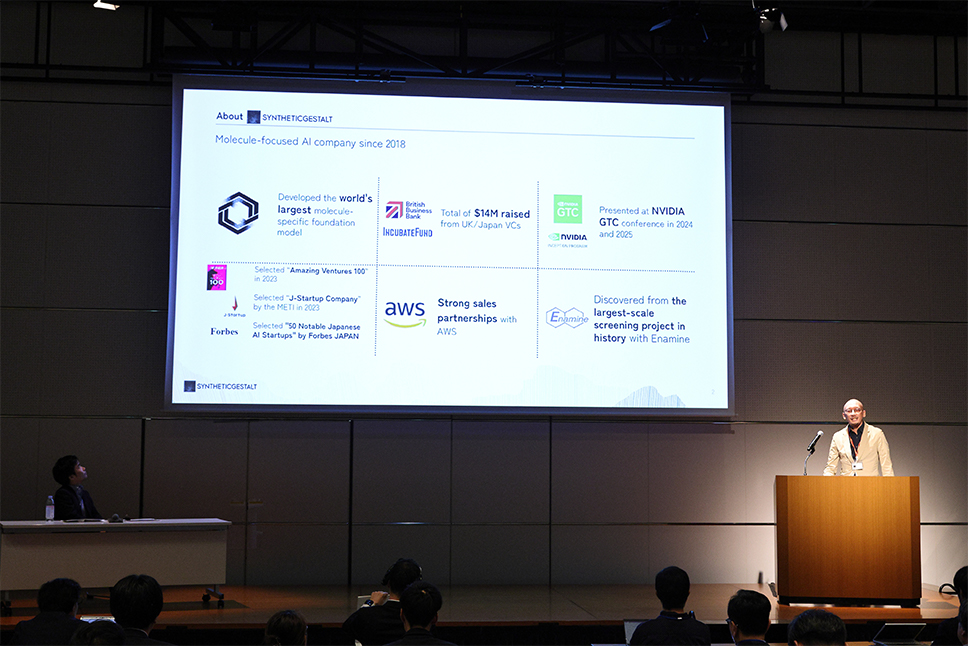
SyntheticGestalt has developed one of the world’s largest “molecule-specialized foundation models,” with applications envisioned across pharmaceuticals, cosmetics, agrochemicals, and new materials.
Through the use of generative AI, it is expected that improving the efficiency of compound selection in drug discovery by approximately 20% could reduce development costs and time by one-third. In collaboration with Enamine, one of the world’s largest synthetic compound vendors, the company utilizes approximately 70 billion compound data points for development. By specializing in small molecules and training the model on 10 billion types of compounds across more than 100 tasks, it has significantly improved AI prediction accuracy in drug discovery and new material development. The company’s model has achieved state-of-the-art (SOTA) performance across all 23 public benchmarks and has successfully identified lead compounds. These results were also presented at NVIDIA GTC 2024, and the company is accelerating global social implementation based on technology originating from Japan.
Going forward, we will continue to share updates on the current status, outlook, and achievements of GENIAC and its selected companies with a broad audience interested in generative AI. We appreciate your continued attention to GENIAC’s activities.
GENIAC Top Page
