
2026/08/20
GENIAC supports a wide range of domestically developed generative AI research and development projects, and their outcomes are contributing to problem-solving through collaboration and co-creation with companies and local governments.
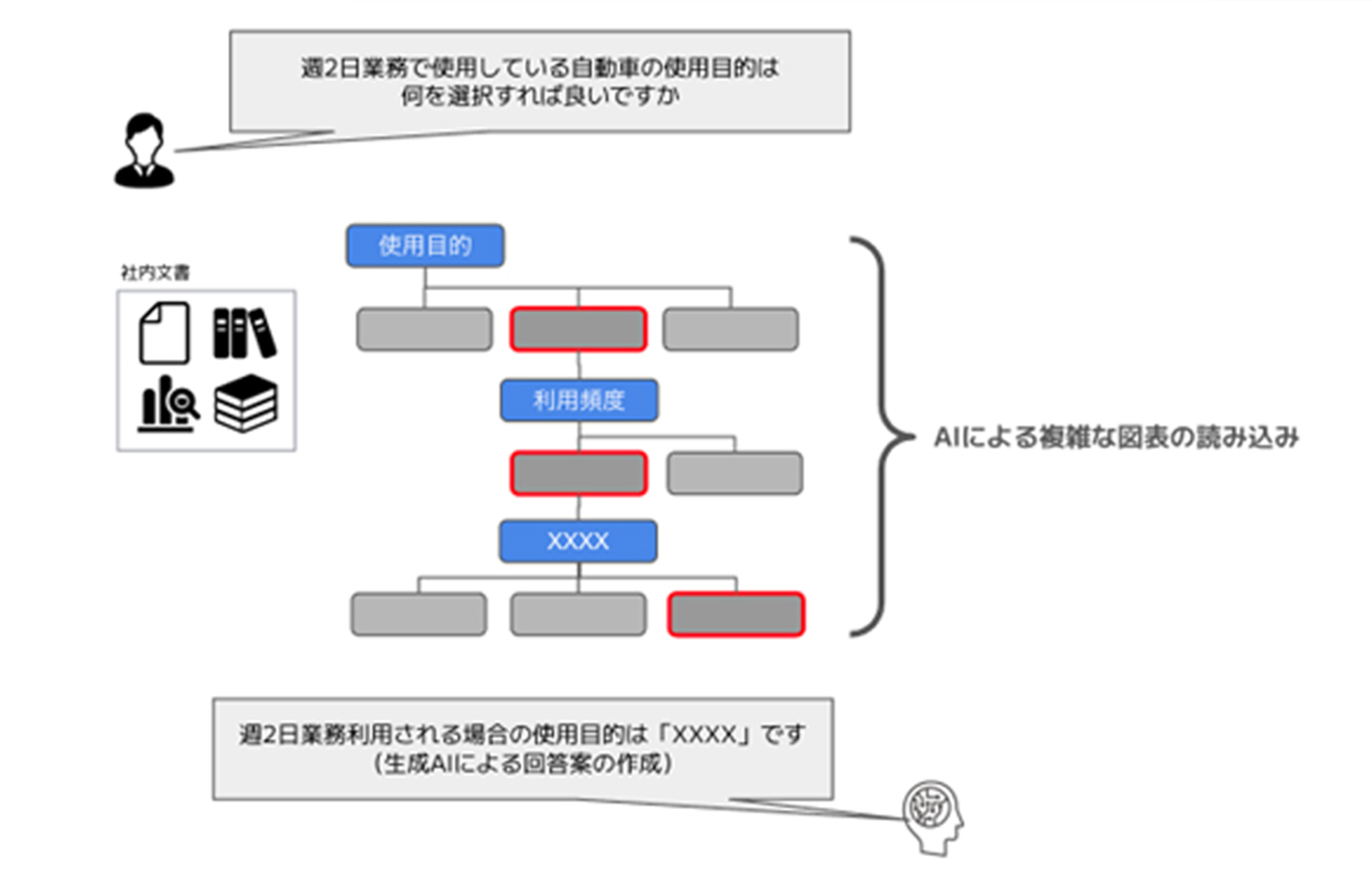
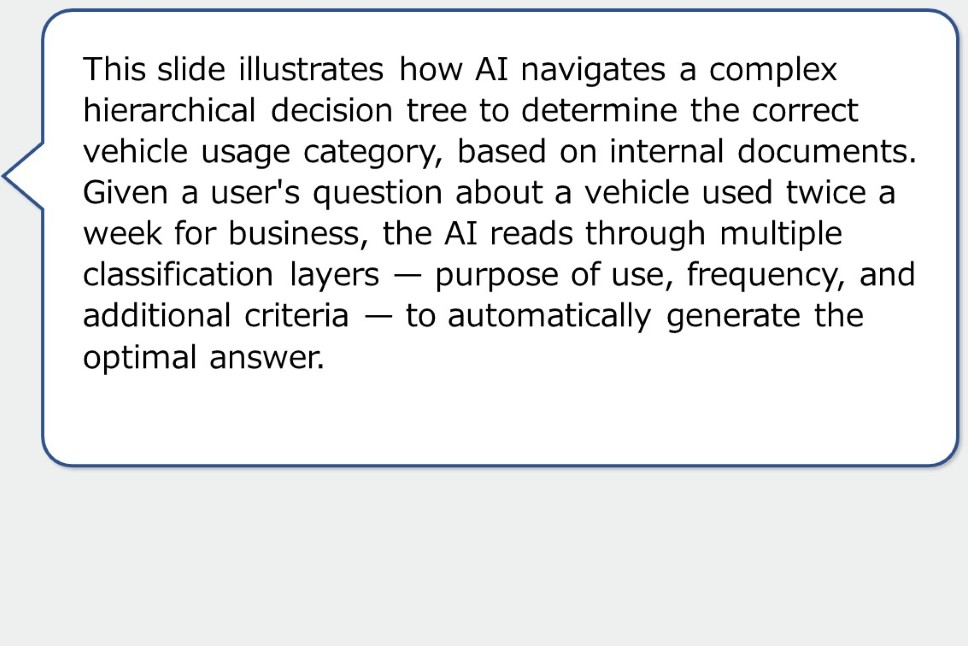
Ricoh Company, Ltd. (hereafter "Ricoh") and Sompo Japan Insurance Inc. (hereafter "Sompo Japan") announced in March 2025 that they are jointly developing a private multimodal large language model (LMM) specialized for insurance operations.* This initiative is part of their efforts under GENIAC and aims to put into practical use AI that can automatically generate optimal responses based on documents and diagrams. We spoke with Mr. Umetsu of Ricoh and Mr. Ishikawa of Sompo Japan about the objectives of the development, as well as its current status and future outlook.
*Project period: December 2024 to April 2025.
Profile
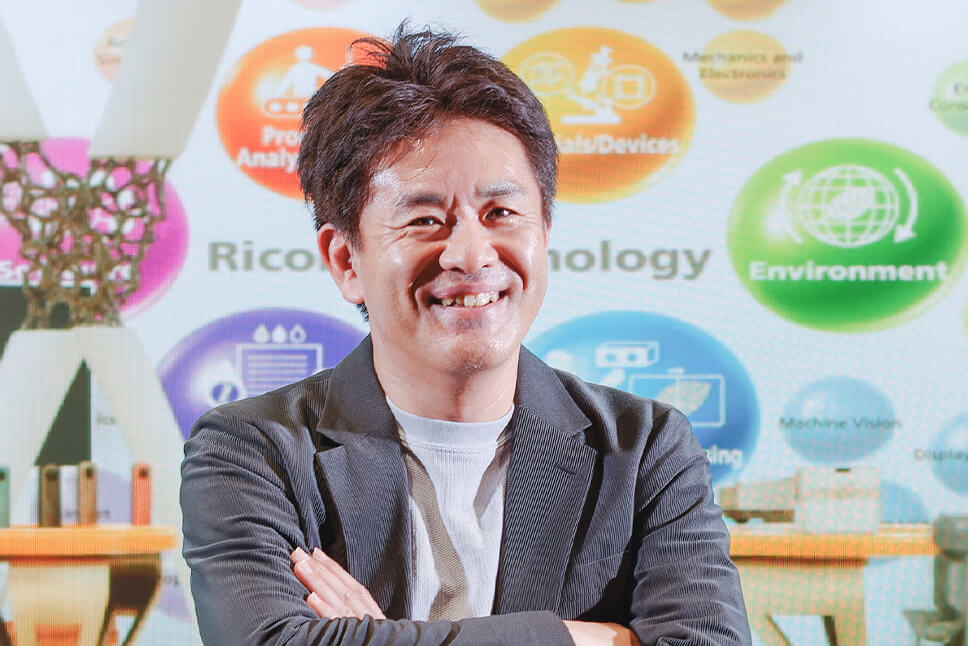
Yoshiaki Umetsu
Head of AI Services Business Division, Ricoh Digital Services Business Unit, Ricoh Company, Ltd. Joined Ricoh in 2016 and worked in the Research and Development Division, where he was responsible for developing AI and IoT solutions. In 2021, he was appointed Director of the Digital Technology Development Center. He has led the development of digital services utilizing various forms of AI, including language, image, and speech technologies.

Shunsuke Ishikawa
Leader, Development Promotion Group, DX Promotion Department, Sompo Japan Insurance Inc. After working on Watson product development at IBM Japan, he joined Sompo Japan in 2022, where he has been engaged in driving digital transformation (DX). He leads the overall development team and is currently focused on projects leveraging generative AI.
The Process of Implementing Generative AI at Both Companies—From R&D to On-Site Application
—How have your organizations approached the development and utilization of generative AI so far?
Umetsu: At Ricoh, we have been engaged in generative AI research and development for some time. Around 2020, we accelerated the development of language-based AI and explored business applications such as chatbots and document comprehension. During this process, we saw a growing demand from companies to use AI trained on their own data, which led us to shift toward developing private large language models (LLMs) that can be deployed on-premises.
Since 2021, we have been developing proprietary models based on the LLaMA family, optimized for Japanese, while also working on making them more compact. At the same time, in the context of utilizing internal corporate documents, we encountered challenges that could not be addressed by OCR alone. This led us to take on the full-scale development of multimodal large language models (LMMs) under the GENIAC project.
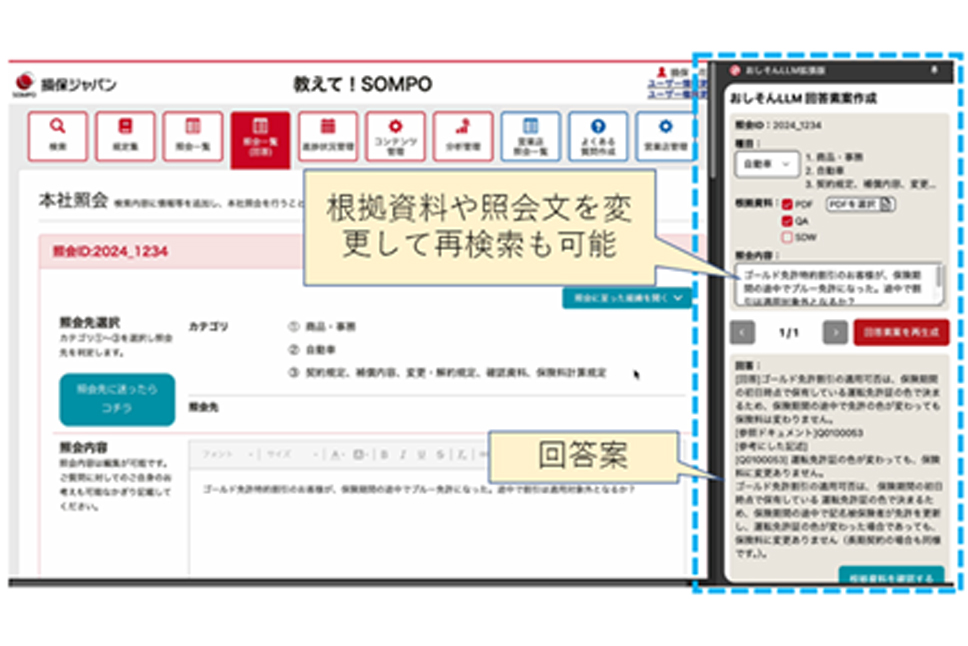
Ishikawa: At Sompo Japan, we began full-scale initiatives related to generative AI around 2023. We first established an internal system for querying company regulations that all employees could use, and then created an environment where each department could experiment with various use cases. Based on this, we developed a system called "Oshiete! SOMPO" ("Tell Me! SOMPO"), which enables natural-language responses to inquiries about insurance products and administrative procedures from sales offices and agencies nationwide.
—What specific challenges have you faced in on-site operations, and how have you addressed them?
Ishikawa: One common challenge in the field is the difficulty of making judgments regarding insurance coverage. For example, when an item is damaged, determining what is covered can be complex. While basic information is documented in manuals, they do not always include detailed item names. As a result, many employees feel the need to consult headquarters to avoid making mistakes.
To address this, we introduced generative AI to automatically generate draft responses to inquiries received via email from the field. At present, the AI does occasionally make incorrect final judgments, but in many cases, around 80% of the generated responses can be used as-is, leading to significant improvements in operational efficiency. However, we are not yet at a stage where decisions can be fully entrusted to AI, and final verification still needs to be carried out by humans. We are continuing to refine and improve accuracy through ongoing tuning.
A Joint Project Enabled by GENIAC: Preparing Data for AI Is Also Key
—What led to this joint development, and how did the collaboration come about?
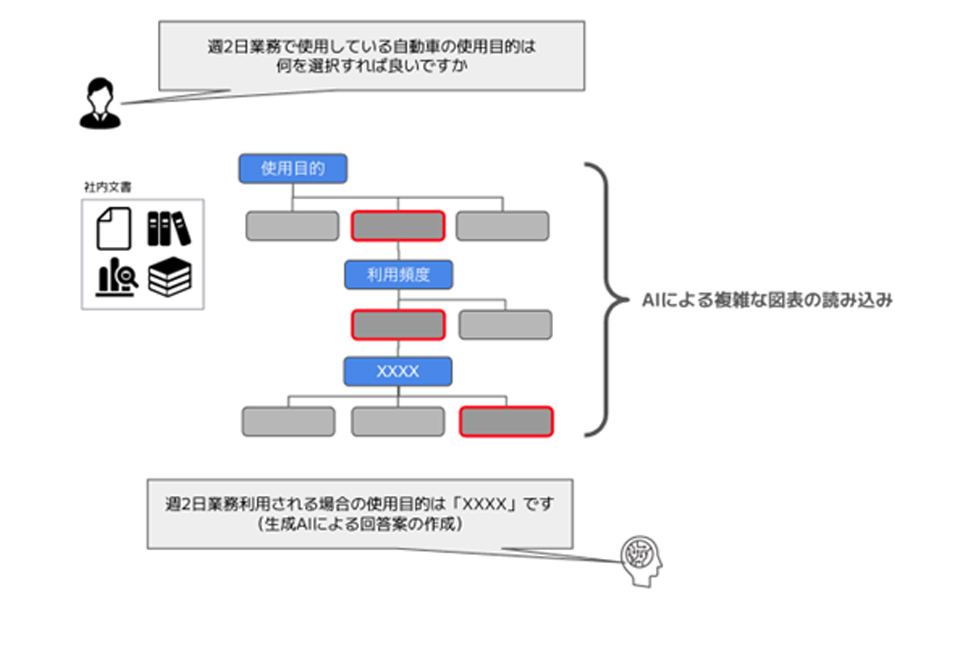
Ishikawa: Insurance documents often contain complex diagrams and flowcharts, but generative AI still struggles to accurately interpret such non-text information. That is why we decided to collaborate with Ricoh to develop a multimodal large language model (LMM) and improve the efficiency of reading and analyzing insurance documents.
Umetsu: With general-purpose models such as ChatGPT-4 and Gemini, it is very difficult to accurately interpret documents common in Japan—for example, complex flow diagrams or intricate table layouts. With support from GENIAC, we began full-scale development at the end of 2023, focusing on improving the accuracy of reading high-resolution diagrams and charts. By early 2024, we had started to see results, and we moved on to fine-tuning and validation using real data provided by Sompo Japan. The timing was ideal—the technological progress in LMMs aligned well with our challenges, and being able to carry this out within the GENIAC framework was a fortunate opportunity.
—How far has the joint development progressed at this stage?
Ishikawa: We are currently in the initial phase. Based on insurance-related documents, diagrams, and real inquiry examples, Ricoh is proceeding with the development of a private LMM. At the same time, we are preparing for model validation by building a system to automate accuracy evaluation, enabling us to compare and analyze the performance of models under development quickly and efficiently.
—How did you address concerns related to data handling during development?
Ishikawa: As a financial services company, we maintain strict standards for data handling. However, without real data, it is difficult to realize the value of generative AI. For this reason, we began internal coordination for AI utilization about two years ago, holding ongoing discussions with system and compliance departments.
By incorporating legal perspectives and refining internal rules and operational policies, we were able to gain positive support from the business side for this project, allowing us to proceed under a well-aligned structure. Ricoh also provided detailed explanations regarding the training required for this development, which helped build internal understanding.
—What are the key factors in gaining internal alignment for generative AI adoption?
Ishikawa: In our case, to help senior management understand the value of AI, we had the CEO use generative AI tools directly. We believed that having top leadership experience the benefits firsthand would serve as a starting point for organizational transformation. At the department head level as well, AI is being used in daily work—for example, processing meeting audio data to generate summaries that can be listened to while jogging.
In reality, discussing only cost or efficiency gains is not always persuasive. Experiencing the convenience of AI firsthand is what fundamentally changes perceptions and drives adoption.
Umetsu: Until last year, AI may have been seen mainly as a tool for brainstorming ideas. However, it has now evolved to a stage where it can be used for practical tasks such as research and document generation. The key to broader adoption is helping people recognize that it is more useful than expected and closing the gap between perception and reality.
—Have there been any new insights gained through the joint development?
Umetsu: We are currently testing how well LMMs can handle advanced documents used in real business settings, including those provided by other companies. The "high-resolution understanding plus fine-tuning" approach has shown promising results, which is a significant step forward. At this stage, there are still areas where the model performs well and others where it does not, with limitations often stemming from insufficient training data.
At the same time, this has brought companies to a point where they can consider practical options—whether to further improve LMM performance or to redesign existing document structures. In other words, the importance of preparing corporate data in formats that are easier for AI to read and learn from is likely to increase going forward.
Not only in financial services and insurance, but across many industries, companies are focusing on strengthening customer support using AI agents. Amid labor shortages and the downsizing of physical locations, there is a growing push to have AI handle extended, high-accuracy customer interactions. From our perspective, there is increasing momentum to rethink document design itself so that it is better optimized for AI.
Ishikawa: We also believe that preparing "AI-ready" data will be essential going forward. In the insurance industry, many documents are designed to pack a large amount of information into a single A4 page, which is the opposite of a structure optimized for AI. In some cases, even important documents no longer have their original data sources available. If those had been preserved, they could have significantly supported the training of AI agents.
As Mr. Umetsu mentioned, improving this situation will require rethinking not only document design and data storage but also the overall cost structure, with a view to enhancing both operational efficiency and customer value. At present, there is no clear definition of what constitutes "AI-readable data," and it is difficult for individual companies to establish this on their own. We hope that frameworks like GENIAC will help advance this effort.
Umetsu: Issues such as the complexity or loss of original data are not limited to financial services—they are widespread in industries such as manufacturing. For example, departments responsible for creating manuals for on-site use often receive materials such as CAD drawings or presentation slides directly from development teams, without access to the underlying structure or source data. Moreover, these materials are often treated as fixed and cannot be modified, leaving on-site staff to use documents that are difficult to interpret.
When attempting to process such documents using LLMs, it can ultimately require substantial computational resources and cost. Through discussions with many companies, I strongly feel that to fully realize AI agent–based support at a national scale, it will be essential to align both those who create information and those who use it, and to optimize the entire process end-to-end.
Toward AI That Works in the Field: An LMM Development Strategy—Start Small and Scale Up
—Could you share how you plan to move forward with the joint development and your goals as organizations?
Ishikawa: At present, we are receiving the models under development from Ricoh and preparing to apply them to our own use cases. Based on actual usage results, we are also discussing how best to utilize them and exploring the next steps. Rather than deploying them immediately in the field, we position this as a phase of gradual validation and application.
Over the past year, we have also been working on validating questions and answers. We have accumulated data assets, such as the differences between AI-generated responses and the final adopted answers. However, to be candid, we have not yet fully addressed image and diagram data. For now, we are relying on temporary measures such as alternative text, but in the future, we are considering approaches in which AI can interpret and explain such visual information as well.
Umetsu: Sompo Japan has a high level of in-house development capability, and we believe they will be able to further fine-tune the open-source LMM we developed and bring it closer to real-world deployment. Integrating processes that include visual information interpreted by LMMs into existing workflows and systems is a technically and operationally complex challenge. In addition, how to incorporate feedback from validation into the training cycle is an area that requires careful operational design by each company.
From Ricoh's perspective, our role is to provide the frameworks and technologies necessary for LMM utilization and to support the establishment of a self-sustaining system. Ultimately, regardless of whether our models are selected, what matters is enabling Sompo Japan to successfully integrate LMM technology into its operations.
At the same time, we aim to establish a position where we can confidently say, "Leave generative AI in the document domain to Ricoh." While many companies and startups are working on leveraging digital data and AI, our strength lies precisely in handling highly complex materials—such as intricate diagrams and manuals—that raise the question, "Can AI really process this?" For example, we aim to build a reputation for excelling at interpreting highly structured spreadsheets. In industries such as manufacturing, a significant amount of technical knowledge is stored in unstructured formats like spreadsheets and remains underutilized. We would like to support companies in activating and visualizing such internal knowledge to drive AI-driven innovation.
We are also working to establish a technical support framework to address needs such as applying retrieval-augmented generation (RAG) to documents and enabling AI-based automated reading and generation of manuals.
—What advice would you offer to companies and organizations that are hesitant about developing or adopting generative AI?
Ishikawa: While the accuracy of generative AI is not yet perfect, we believe it already provides sufficient value for practical use. Rather than focusing solely on achieving perfect answers, the key lies in how much useful support AI can provide throughout the process. Instead of making large-scale investments from the outset, we believe it is best to start small, experiment, and refine operations along the way.
Umetsu: I strongly agree with Mr. Ishikawa. In fact, when inviting companies to participate in GENIAC-related projects, we have seen many cases where an insistence on perfect results became a barrier to agreement.
Even without achieving 100% accuracy, there are many cases where AI can still be valuable in business operations. That is why we would like to continue encouraging companies to approach AI development more casually and take the first step.

